I Tested Plug-In Solar: Does It Actually Work?
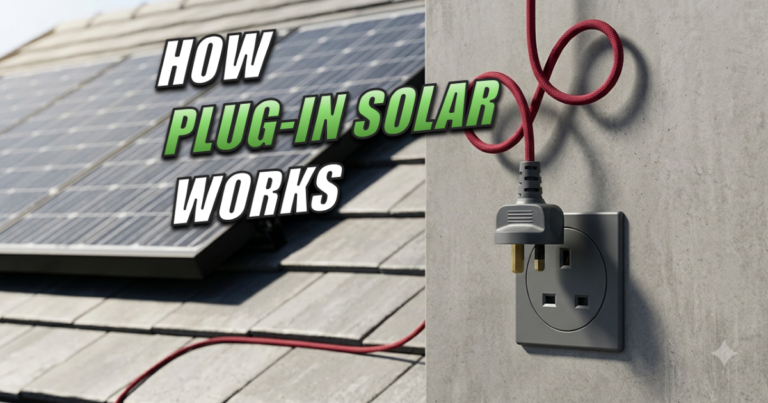
In my recent breakdowns of the UK plug-in solar landscape—which you can catch up on in my guide covering UK plug-in solar rules—we talked through the safety side of things and the path-of-least-resistance physics of how these little systems feed your home ring main.
Now It’s time to put the theory to the test.
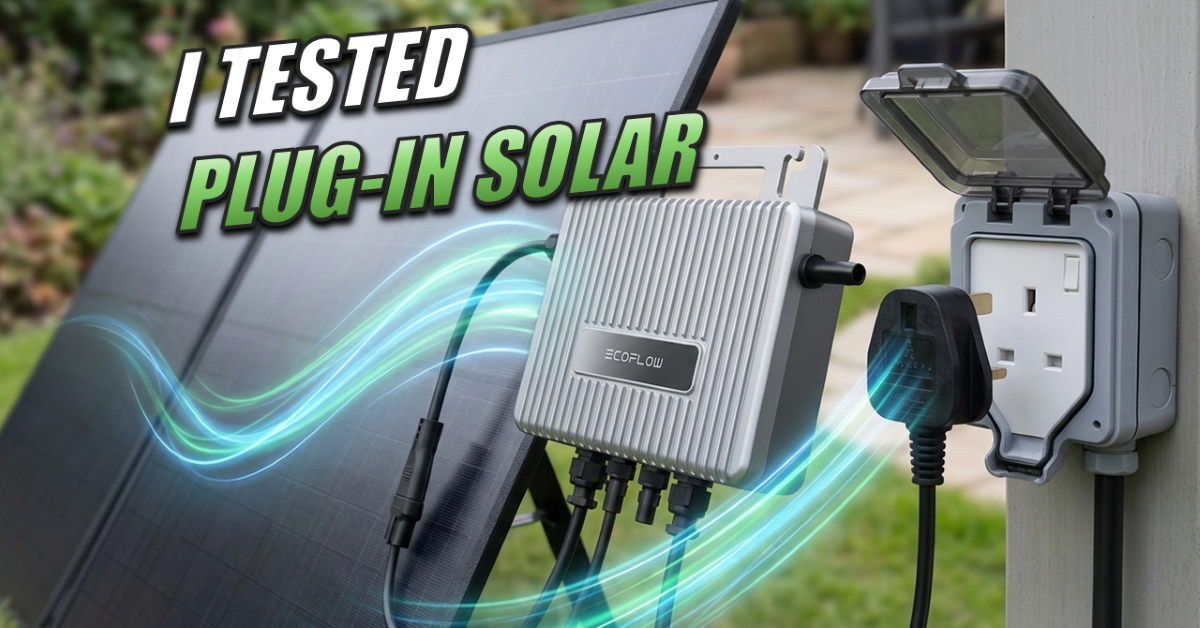
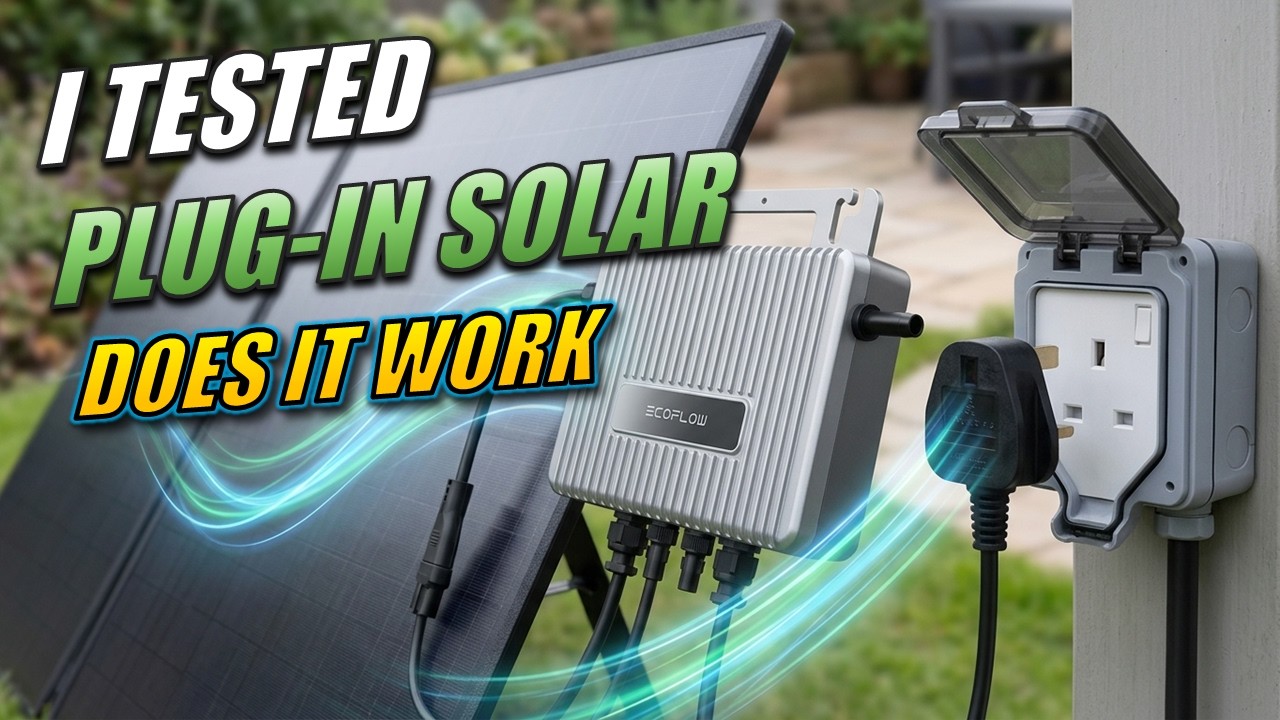
I unboxed and fired up my EcoFlow Stream plug-in solar system to see what happens when you hook two solar panels to a microinverter, drop a 3-pin plug into a wall socket, and watch the meters. Does a straightforward, DIY plug-and-play setup actually move the needle on your electricity bill? Or is it all smoke and mirrors?
Let’s dig into the setup and the real-world numbers.
Watch The Video for Setup & Testing
You can watch the full video walk through of setting up and testing the plug-in solar microinverter or read on for a detailed guide.
The Kit & The Prep
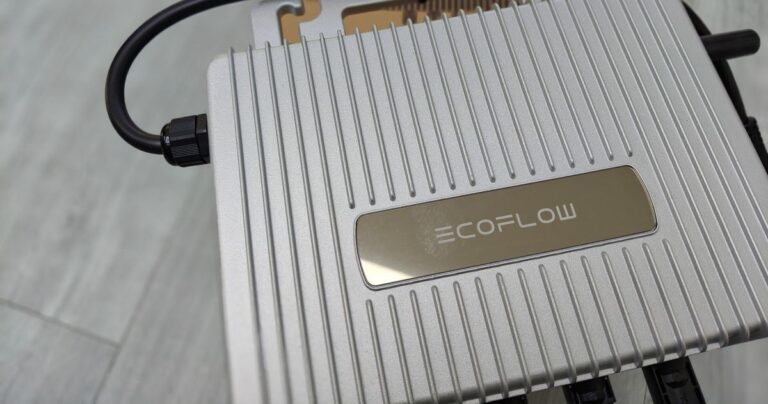
My EcoFlow Micro Inverter arrived with two pairs of pre-terminated solar cables (MC4 connectors—one pair per input channel) and an AC power lead for the mains.
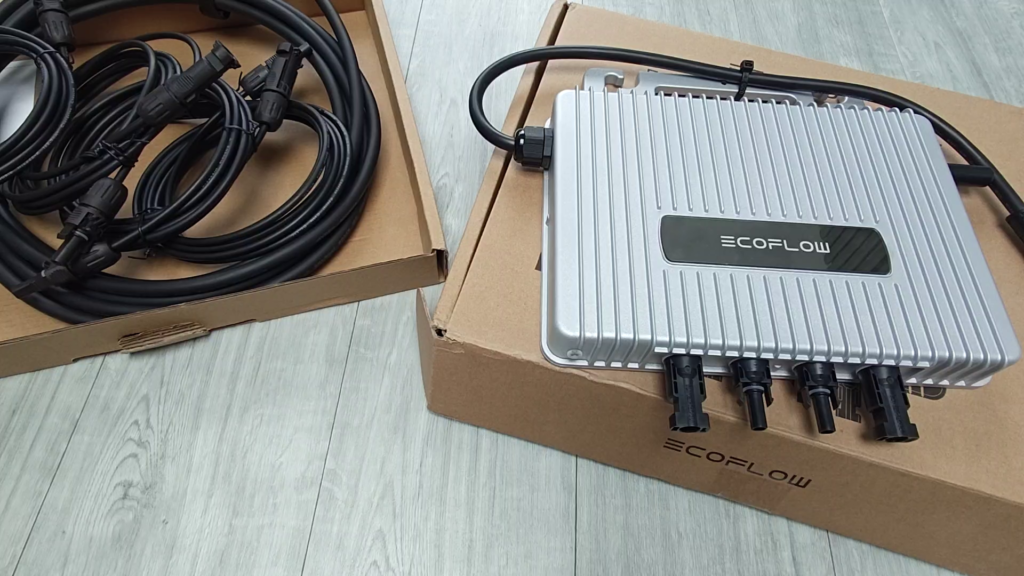
Depending on your kit variations, the mains plug rules dictate how it’s bundled, though on mine I needed to fit a solid, rugged 3-pin plug myself. If you need to do the same, check out my video walkthrough on how to install a UK 3-pin plug safely.
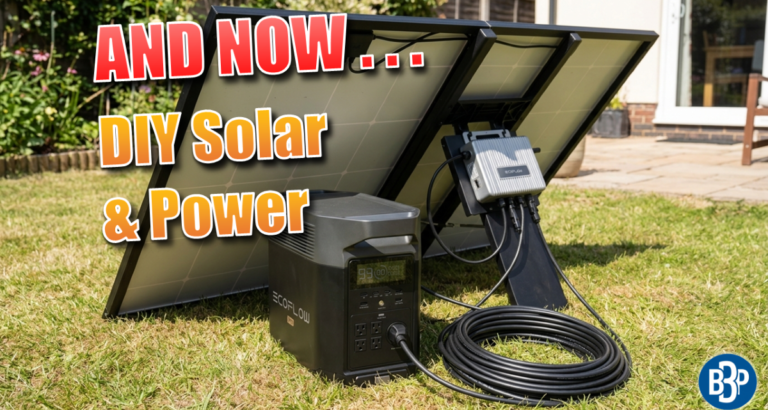
For this initial test, I didn’t bother with scaffolding or permanent roof mounting yet. I laid the whole thing out temporarily on the garden lawn just to verify communication, check the MPPT tracking, and make sure the inverter shook hands with the grid cleanly.
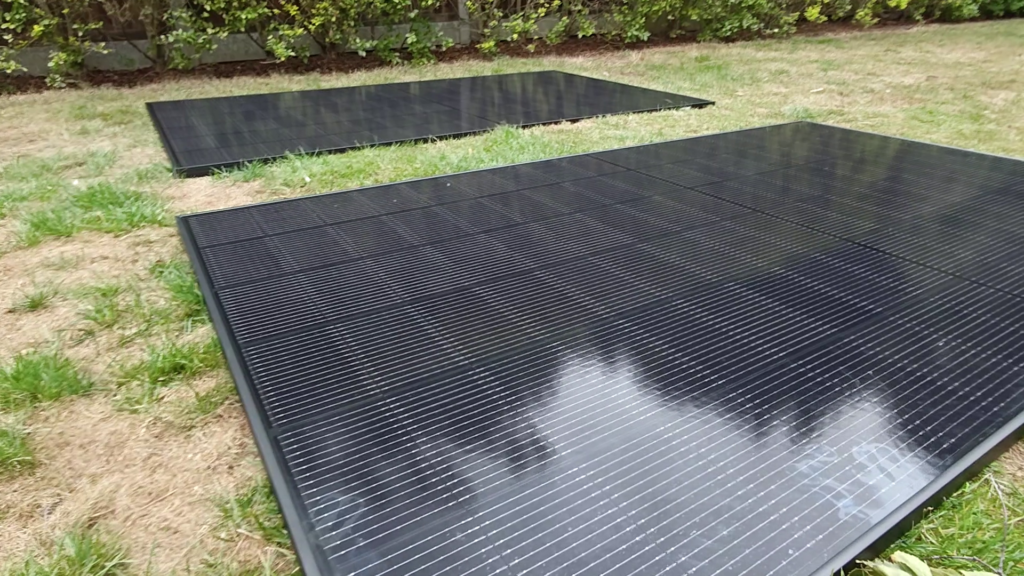
If you’re wondering why I sized the array the way I did—or how to avoid choking your microinverter’s maximum input limits—take a look at my guide on choosing the right solar panels for the EcoFlow Stream.
The physical setup genuinely couldn’t be simpler:
- Connect the PV cables from Solar Panel 1 and Solar Panel 2 into the respective input channels on the microinverter.
- Connect the AC inverter lead equipped with your 3-pin plug.
- Plug it into the wall socket.
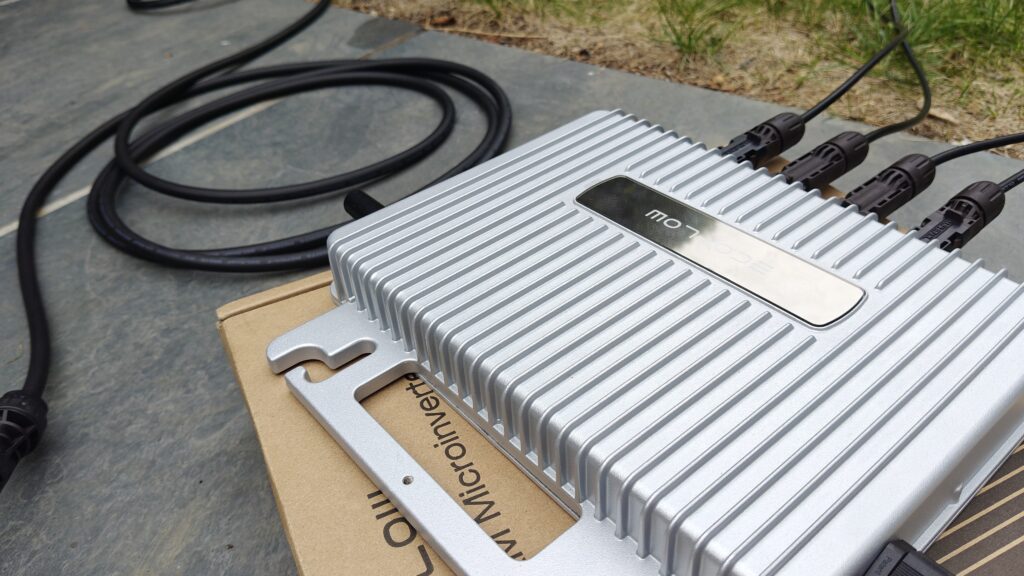
When you first flick it on, the status LEDs flash green while the inverter listens to the grid frequency and syncs up. Once those lights turn solid green? You’re live.
App Configuration & First Power-Up
To see what’s actually happening under the hood, you’ll want to fire up the EcoFlow app (available on iOS and Android):
- Create or log into your account and select your region (United Kingdom).
- Pair to the microinverter via Bluetooth.
- Hand over your 2.4GHz Wi-Fi credentials so it can check in to the cloud.
- Assign the device to your space (mine’s sitting right out in the back garden for now).
- Head into settings and configure your grid output limit for your region—in the UK, that caps out safely at the regulated 800W threshold.
Once settled in, I opened the device dashboard and watched the telemetry roll in.
If you want a deeper look at the voltage-pressure mechanics of how reverse-current feeding works on a ring main without tripping your internal breakers, check out my deep dive on how plug-in solar works to power your home.
And the weather outside? Completely overcast. Zero direct sun.
The Results: Crushing the Base Load on a Grey Day
Here is where plug-in solar starts making intuitive sense.
With 1,000W of total solar panels hooked up to the EcoFlow Stream under a thick, gloomy, grey UK sky, the system was churning out a steady 216W to 236W (pulling roughly 98W from Panel 1 and 135W from Panel 2, which had a tiny bit of dappled shade variation).
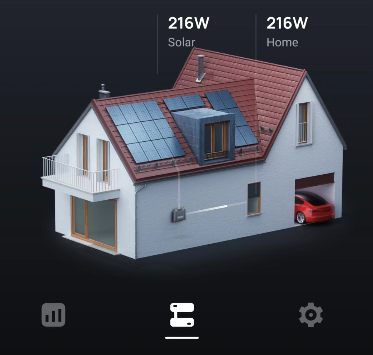
Why is 200-odd watts a big deal? Because my home’s background base load sits right around 165W.
If you aren’t sure what your own background idle draw is or how to measure it down to the exact watt, you can track it using a hardwired clamp monitor like the setup outlined in my Shelly EM energy monitoring guide.
Think about what your house draws when nobody is actively boiling a kettle or running the tumble dryer: your fridge-freezer compressor cycling, your broadband router, standby LEDs, smart home hubs, and the background hum of electronics. That’s your base load.
On a miserable, sunless day, the plug-in solar setup was completely wiping out my baseline draw—feeding my home circuits directly from the lawn before a single watt of grid electricity needed to be imported for those idling devices.
Where to Get an Ecoflow Microinverter
I picked mine up on Amazon. There are quite often sales promotions, so keep your eyes open for those.
- Here’s the Ecoflow Stream Micro Inverter
- Here’s the Ecoflow Amazon Store
- Masterplug UK Ruggedised Plug
- Visit the Musterplug store
- Get your own DIY electrical wiring kit
What’s Next?
It’s live, and it’s quietly shaving my energy bills as we speak. Even when the sun isn’t at full blast.
Next up, I’m logging a full week of real-world generation data to crunch the actual financial offset, taking you through the permanent physical installation (getting these panels off the grass and properly racked), and diving deeper into the EcoFlow app features like smart plugging and automation.
Have you dipped your toes into plug-in solar yet, or are you waiting to see the 7-day generation stats? Drop a comment or reach out over on the socials—and make sure you’re subscribed so you don’t miss the final figures.
Frequently Asked Questions (FAQ)
Is plug-in solar actually legal in the UK?
Yes. Under updated UK guidelines and regulations for plug-in solar systems, you can feed energy back into your home circuit via a standard socket, provided the system complies with safety standards and adheres to the official output limit—which is capped at 800W in the UK. You can easily configure and lock this output limit directly inside the EcoFlow app.
Do you need an electrician to install a plug-in system?
Not for a standard plug-and-play setup. Because the system connects via pre-terminated MC4 solar cables to the microinverter and uses a standard 3-pin plug for the mains, you don’t need a certified electrician to wire a roof array. You simply plug it into a dedicated or suitable wall socket. (Note: Always ensure your DIY wiring, plugs, and local circuit capacity meet proper safety standards).
How much power does a 1,000W setup actually generate on a cloudy day?
As shown in my initial lawn test, a 1,000W panel array pulled between 216W and 236W under completely grey, overcast conditions with zero direct sunlight. While it won’t max out its peak capacity on gloomy days, it’s more than enough to offset small, continuous household draws.
What is a “base load” and why does it matter?
Your base load is the baseline electricity your home constantly consumes just by staying turned on—things like your fridge-freezer compressor, Wi-Fi router, standby clocks, and smart home hubs. For my house, that baseline sits right around 165W. Because my plug-in system was generating over 200W even on a cloudy day, it completely covered my base load for free.
Do I need a battery for plug-in solar to work?
No. Plug-in solar microinverters (like the EcoFlow Stream) feed generated electricity directly into your home’s internal ring main whenever the sun is out. Whatever your house is actively consuming gets powered first by the panels; any excess beyond your home’s immediate demand could theoretically push back to the grid (though the 800W software limit keeps things tidy). Batteries can be added to store surplus energy, but they aren’t required to get up and running.
Where should I permanently mount the panels?
While I tested everything temporarily on the garden lawn to verify the tech and run quick diagnostics, you’ll want to mount panels somewhere with unobstructed daylight—such as a south-facing garden fence, a flat garage/shed roof, or a dedicated wall/balcony mount free of tree or chimney shade. Stay tuned for my upcoming permanent installation guide!
Other Articles You Might Like
- The Path of Least Resistance: How Plug-In Solar Works to Power Your Home
- How to Choose the Best Solar Panels for the EcoFlow STREAM Microinverter (And Why You SHOULD Oversize)
- Is Plug-In Solar FINALLY Legal in the UK? (The August 27 Rules Explained)
- The Easiest DIY Solar Setup Ever? (EcoFlow PowerStream Microinverter Unboxing)
- What Home Electrical Work Can You Do Yourself: A Guide to Your Home’s Electrical Supply
- How to Change a Double Wall Socket (UK): A Step-by-Step DIY Guide
- Why You Need Wire Ferrules for the Best Crimp Connections
Subscribe Now!
I hope you found this plug-in solar test helpful. If you’re ready to stop guessing and start troubleshooting your own home tech and smart DIY projects safely, head over to the Built By Pete YouTube channel! We’ve got hundreds of step-by-step tutorials to simplify your tech life. Click here to subscribe and hit the notification bell so you never miss a guide!