How to Choose the Best Solar Panels for the EcoFlow STREAM Microinverter (And Why You SHOULD Oversize)
If you’re setting up a DIY plug-in balcony solar system using the EcoFlow STREAM microinverter, picking the best solar panels can feel like navigating a minefield.
Choose the wrong panel and you risk blowing past the microinverter’s hard electrical limits or severely crippling your daily energy yields. But make the right choice—and understand the secret behind oversizing your array—and you can squeeze maximum free electricity out of your microinverter all day long.
In this guide, we’ll break down the exact electrical specs printed on the back of the EcoFlow microinverter, walk through a real-world panel matching example, and explain why pairing an 800W inverter with over 1000W of solar is the ultimate DIY hack.
1. Decoding the Limits: What the Specs on the Back Actually Mean
When you turn the EcoFlow unit around, you’ll see three critical electrical ratings:
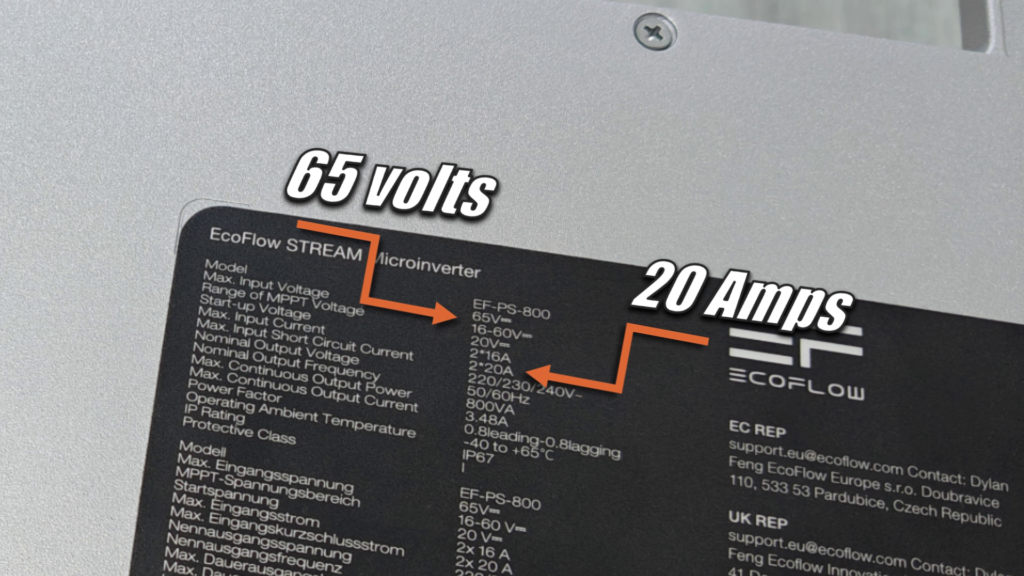
- Max Input Voltage: 65V DC
- Max Input Short-Circuit Current (Isc): 2 x 20A
- Max Operating Input Current (Imp): 2 x 16A
Here is how to translate these numbers into a safe panel selection:
Rule 1: Temperature & Open-Circuit Voltage (Voc)
The 65V DC limit is a hard hardware safety ceiling. Your panel’s Open-Circuit Voltage (Voc) must stay below this number under all conditions.
The Winter Cold-Snap Warning: > Solar panel voltage increases as temperatures drop! A panel rated at 50V Voc on a warm 25°C summer day could easily spike past 60V–65V on a freezing winter morning. To protect your inverter, aim for panels with a Voc rating between 35V and 50V. This leaves a comfortable safety buffer against cold-temperature voltage spikes.
Rule 2: Short-Circuit Current (Isc) vs. Operating Current (Imp)
- Max Short-Circuit Current (Isc = 20A): This is the absolute physical current cap. Keep your panel’s Isc spec below 20 Amps per port.
- Max Operating Current (Imp = 16A): Each port actively pulls up to 16 Amps of continuous working current. If your panel produces 17A or 18A on a bright day, don’t worry—the EcoFlow will safely clip (limit) the intake to 16A without damaging the unit. Staying right around 14A to 16A is the absolute sweet spot.
2. Real-World Panel Match: DMEGC 515W All-Black
To see what the best solar panels look like on paper for this inverter, let’s look at a popular commercial solar panel: the DMEGC 515W All-Black panel (DM515G12RT-G54HBB). This is the panel I have ordered and will be doing real world testing when they arrive.
Specifications vs. Limits Table
| Specification Parameter | EcoFlow Inverter Limit (Per Port) | DMEGC 515W Panel Spec | Compatibility Result | Why It’s a Great Match |
| Max Voltage (Voc}) | 65V Max | 40.75V | ✅ SAFE | Headroom below 65V; stays safe during freezing winter voltage spikes. |
| Short-Circuit Current (Isc) | 20A Max | 15.83A | ✅ SAFE | Comfortably under the 20A absolute safety ceiling. |
| Operating Voltage (Vmp) | Range: Up to 65V | 34.61V | ✅ EXCELLENT | High working voltage drives strong output on cloudy/hot days. |
| Operating Current (Imp) | 16A Max | 14.88A | ✅ OPTIMAL | Sits right in the sweet spot (14A–15A); requires minimal current clipping. |
| Connectors | Standard MC4 | MC4 / MC4-EVO2A | ✅ PLUG & PLAY | Direct connection with no adapters required. |
| Total Array Power (2 Panels) | Capped at 800W Grid Output | 1030W Combined | ⚡ PERFECT OVERSIZE | Gives you 1000W+ array capacity for maximum daily generation. |
As you can see, two 515W DMEGC panels sit right inside every safety parameter while pushing the system to its full energy potential.
3. Physical Check: Don’t Forget Size and Weight!
Before ordering high-wattage panels (500W+), check your installation area’s physical constraints:
- Size: 500W+ panels often measure nearly 2 metres long and over 1.1 metres wide.
- Weight: These panels typically weigh between 22 kg and 26 kg each.
Whether you are mounting on a roof, balcony railing, or ground frame, make sure your structure can physically accommodate panels of this size and weight before buying!
4. The 1000W+ Secret: Why You SHOULD Oversize an 800W Microinverter
A common question in the DIY community is:
“If the EcoFlow microinverter output is capped at 800 Watts grid output, why should I connect 1000W or 1040W worth of panels?”
It might seem like wasted capacity at first glance, but oversizing your solar array (often called the DC-to-AC ratio) is actually standard solar practice. Here’s why:
Reason 1: “Lab Ratings” vs. Real-World Losses
Solar panel wattage is tested in pristine laboratory conditions (Standard Test Conditions / STC: 25°C cell temperature, perfect irradiance). In the real world, heat, atmospheric haze, dust, cloud cover, and low winter sun angles mean a 500W panel typically operates at 70% to 85% of its sticker rating (around 350W–400W).
Even if you buy the best solar panels on the market, real-world losses mean an exact 800W array will almost never allow you to hit your microinverter’s 800W output cap.
Reason 2: Creating a “Wider Peak”
Oversizing allows you to capture significantly more energy during the morning and afternoon hours:
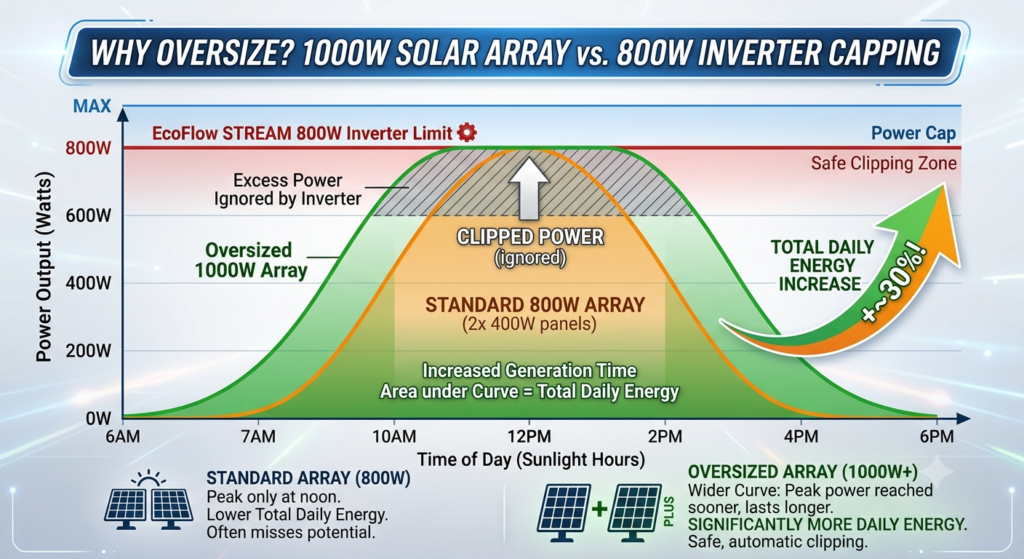
- Standard 800W Array: Slowly ramps up, touches 800W for perhaps 30 minutes at peak midday, and immediately drops off.
- Oversized 1030W Array: Ramps up steeply in the early morning, hits the inverter’s 800W limit by mid-morning, stays pegged at maximum 800W output for hours, and stays high late into the afternoon.
Reason 3: It Won’t Harm Your Inverter!
The EcoFlow STREAM is built with active power management. During absolute peak midday sun, the inverter simply clips (ignores) the extra incoming power above 800W. The excess power remains unharvested in the panels. It does not force excess power through the circuitry or cause damage.
Checklist: Choosing the Best Solar Panels for Your Setup
Before you buy, run through this quick final checklist to make sure you get the best solar panels that line up with the EcoFlow’s specs:
- Check Voc: Keep panel Open Circuit Voltage between 35V and 50V (never exceed 65V).
- Check Isc: Ensure Short Circuit Current is under 20A.
- Target High Vmp: Choose panels with higher working voltage for better low-light performance.
- Oversize safely: Target 1000W to 1100W total solar array capacity across the two ports.
- Verify physical mounting: Measure twice!
A quick heads-up: Always double-check that your solar panels match the voltage and power specs of your inverter and manufacturer’s recommendations before hooking everything up! While we love sharing what’s great about these setups, Built by Pete can’t take responsibility for any gear damage or hiccups if the equipment isn’t matched or installed correctly. Have fun, play it safe, and enjoy your solar setup!
Watch the Full Video Guide
Want to see these concepts in action? Check out the video on the channel:
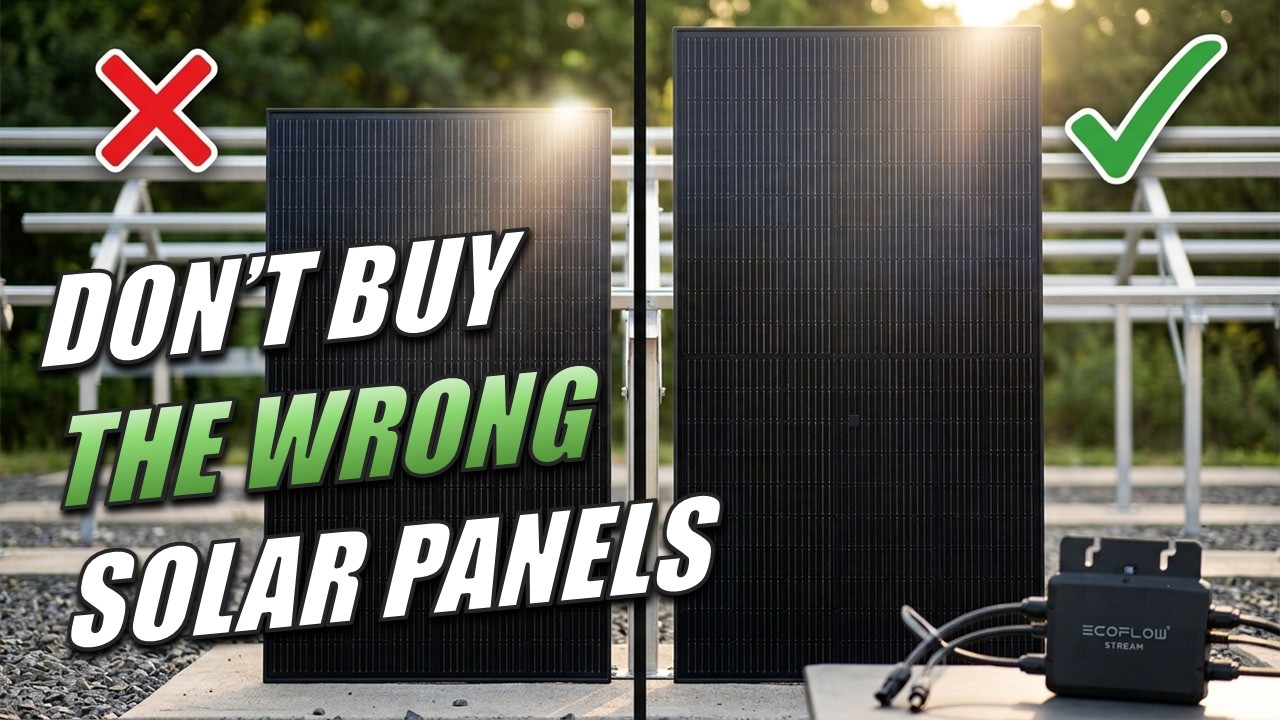
More Solar Videos You Might Like
BuiltByPete Solar Guides
Check out solar video reviews, tips and guides on the BuiltByPete Youtube channel .
▶ Explore BuiltByPeteWhere to Find The EcoFlow Microinverter
I picked mine up on Amazon. There are quite often sales promotions, so keep your eyes open for those.
- Here’s the Ecoflow Stream Micro Inverter
- Here’s the Ecoflow Amazon Store
I’m going to integrate a Shelly smart meter. Where to get your Shelly:
- Get the Shelly em on Amazon
- Check out the Shelly Store
Plug-In Solar Finally Legal in the UK
Find out more about the plug-in solar regulation for the UK. Read my article Is Plug-In Solar FINALLY Legal in the UK? (The August 27 Rules Explained)
More to Interest You
- Powering the Future: Why DIY Solar is Joining the Stack at Built By Pete
- Ecoflow PowerStream: DIY Friendly Grid-Tied Microinverter
- The Solar Journey: Now is the Time for “DIY Plug In Solar”
- Why the Neon Mains Voltage Tester Screwdriver is the Most Dangerous Tool in Your Box (And What to Use Instead)
- How to Use the Kewtech KEWCHECK103: The DIY Guide to Testing Your Sockets
- The Best Desk Upgrade: Knightsbridge Mini Pop-Up USB Charger Review
Subscribe Now!
I hope you found this guide for choosing the best solar panels helpful. If you’re ready to stop guessing and start troubleshooting your own home tech and smart DIY projects safely, head over to the Built By Pete YouTube channel! We’ve got hundreds of step-by-step tutorials to simplify your tech life. Click here to subscribe and hit the notification bell so you never miss a guide!