The Easiest DIY Solar Setup Ever? (EcoFlow PowerStream Microinverter Unboxing)
If you’ve ever spent any time looking into DIY home solar, you’ve probably come to the same realization I did: it can get incredibly complicated, incredibly fast. Between navigating permit applications, configuring massive battery arrays, and dropping thousands of pounds before you even generate a single watt of electricity, traditional solar can feel completely out of reach for the average household.
But what if you could bypass the expensive electrician fees and complex structural installations altogether?
That’s exactly what the brand new EcoFlow PowerStream Microinverter promises to do. I’m starting a brand new home solar journey right here in the UK to see if a simple, plug-and-play solar setup is actually worth it.
Before we get to the actual installation, let’s break down exactly what you get for your money, what’s in the boxes, why this tiny bit of tech is a pretty big deal, and—crucially—where it stands within the UK’s legal framework.
(Prefer watching over reading? Check out the full unboxing video below!)
Box 1: The Star of the Show (The Microinverter)
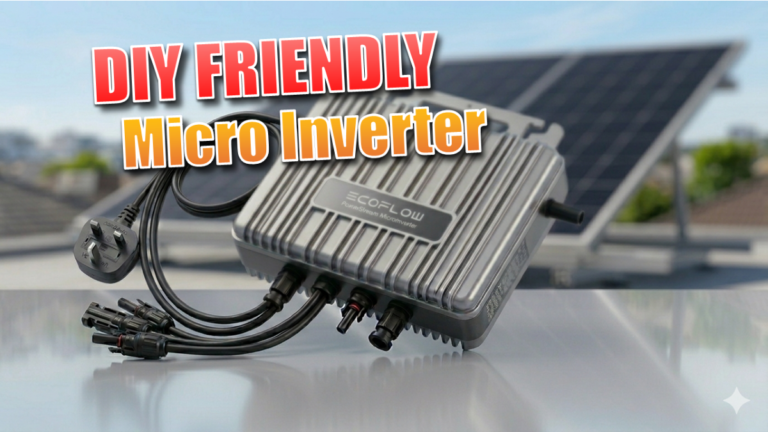
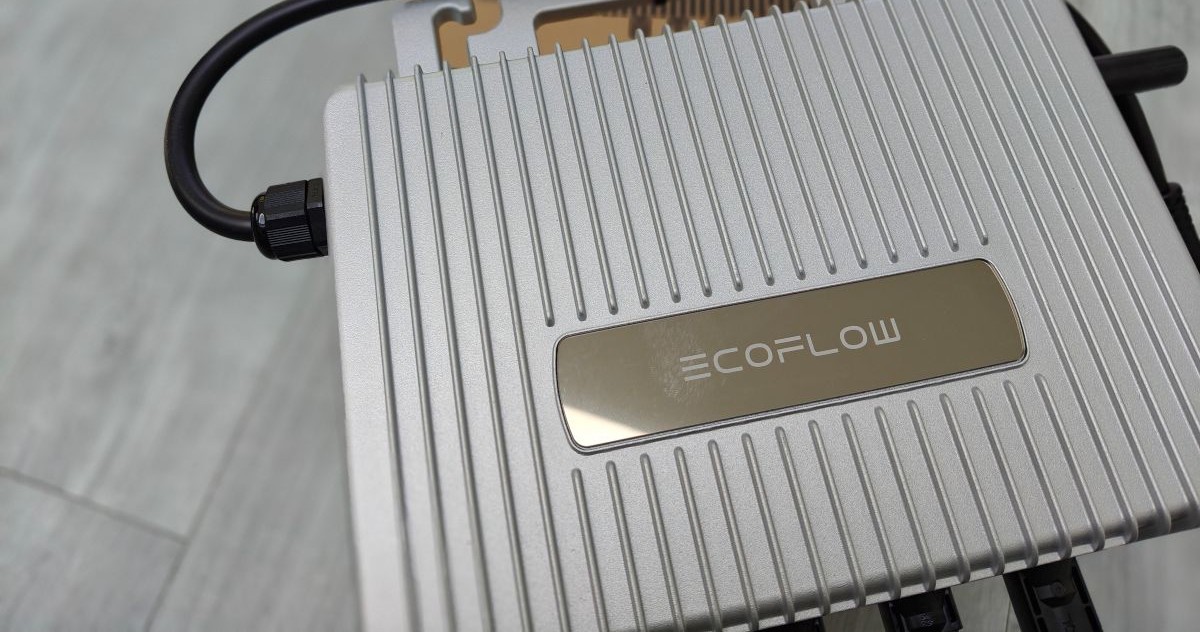
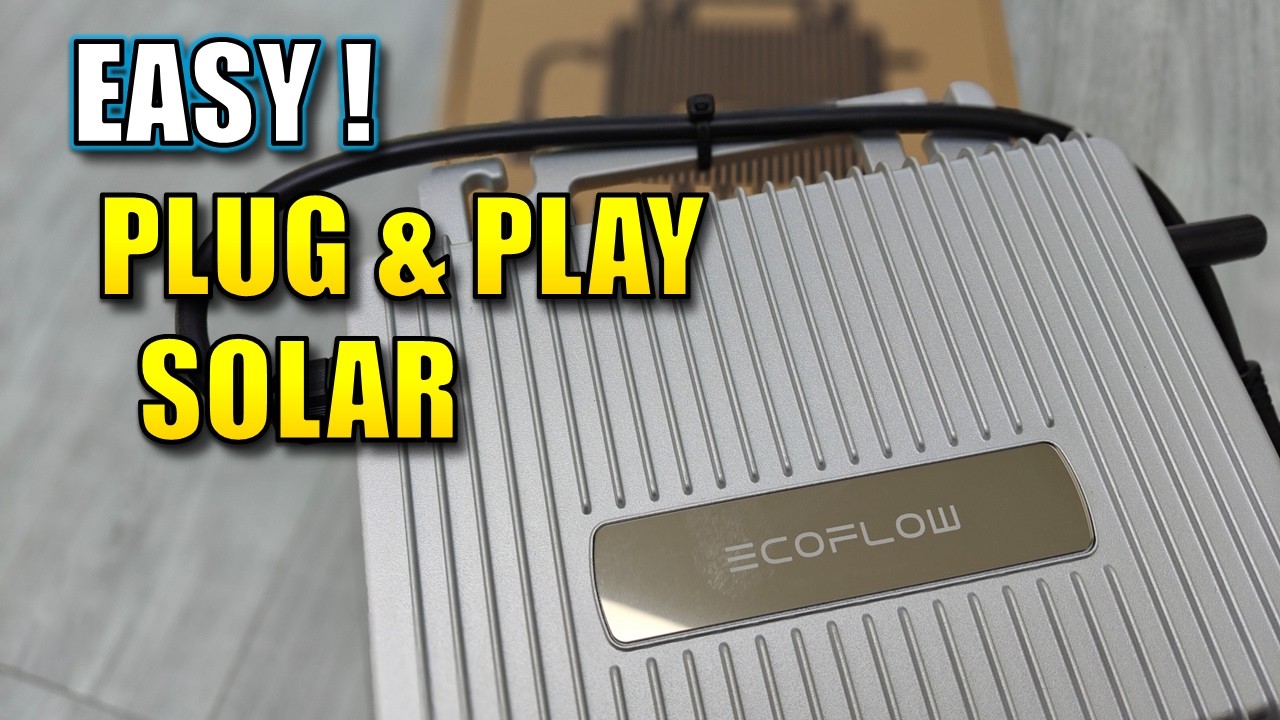
Right off the bat, holding the EcoFlow powerstream microinverter, it feels incredibly premium. It’s compact, but it has a really reassuring weight to it.
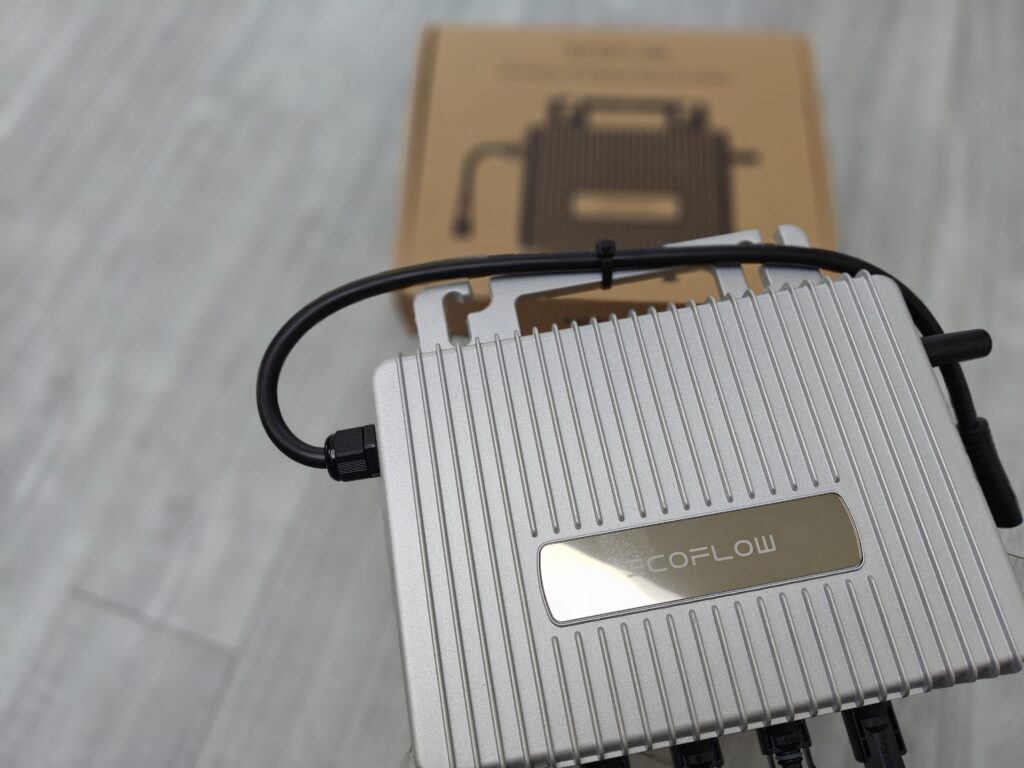
Instead of a cheap plastic shell, it features a solid metallic chassis designed to act as a heat sink. This is crucial because microinverters can get quite warm when they are working hard to convert solar energy into usable home electricity.
Built for the Great British Weather
One of the standout features of this unit is its IP67 rating. In plain English, that means it is completely dustproof and waterproof. Because it’s fully weatherproof, you don’t have to sacrifice indoor space. You can bolt this directly onto:
- Your outdoor wall
- A solar mounting frame
- Right behind your solar panels
- Onto balcony rails
You can leave it out in the elements without worrying about the unpredictable British weather ruining your investment.
The Tech Specs: What Makes It So Clever?
Inside this compact box are dual MPPT channels supporting up to 600W of solar input per channel.
Why does this matter? It means you can plug two entirely different solar panels into this little unit, and it will optimize the power from both of them independently. If one panel gets shaded by a tree or a cloud in the afternoon, the other panel will keep producing at maximum power.
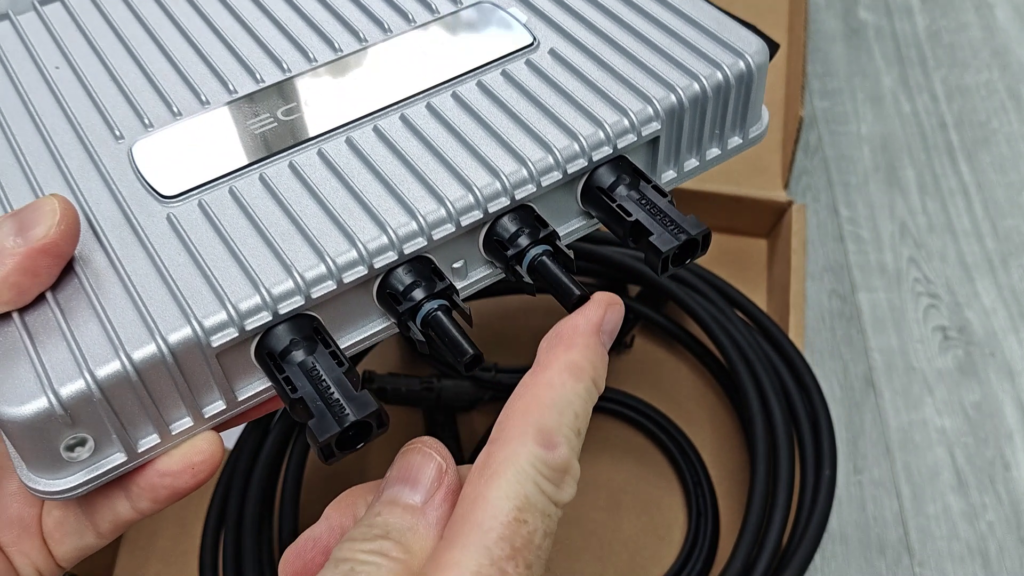
It also features built-in Wi-Fi and Bluetooth. Everything connects straight to the EcoFlow smartphone app, allowing you to monitor exactly how many watts your panels are pulling in—and exactly how much money you’re saving—all in real time.
Box 2: True Plug-and-Play Cabling
Moving on to box number two, we have the cabling package. Inside, you get heavy-duty solar extension cables and the mains connection cable.
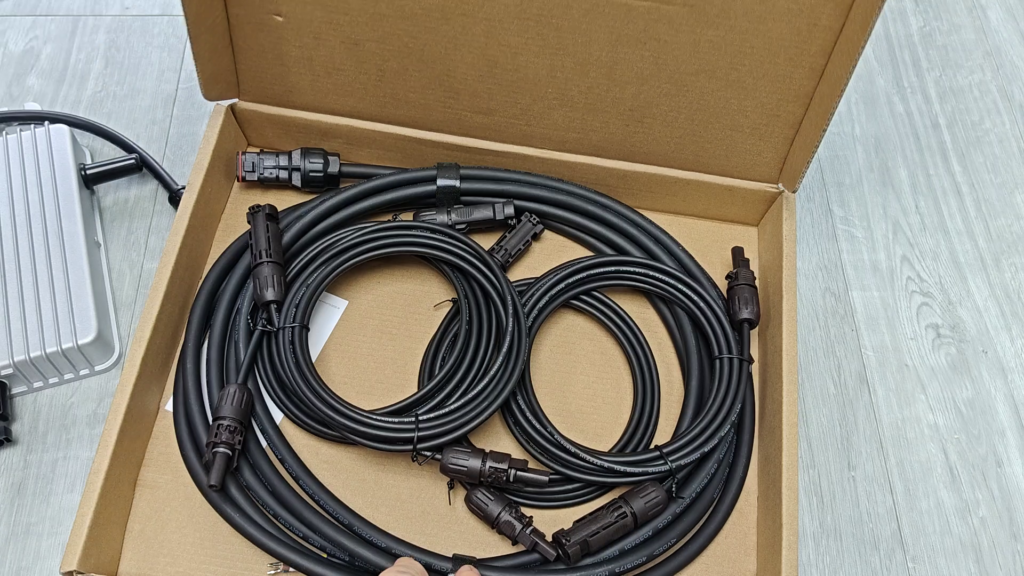
The connectors on these cables are incredibly robust, weatherproof, and strictly plug-and-play. There’s absolutely no bare wire screwing or stripping required.
The system design is beautifully simple:
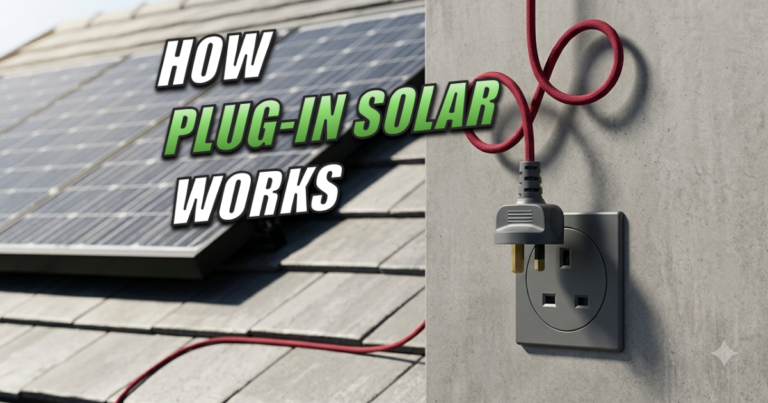
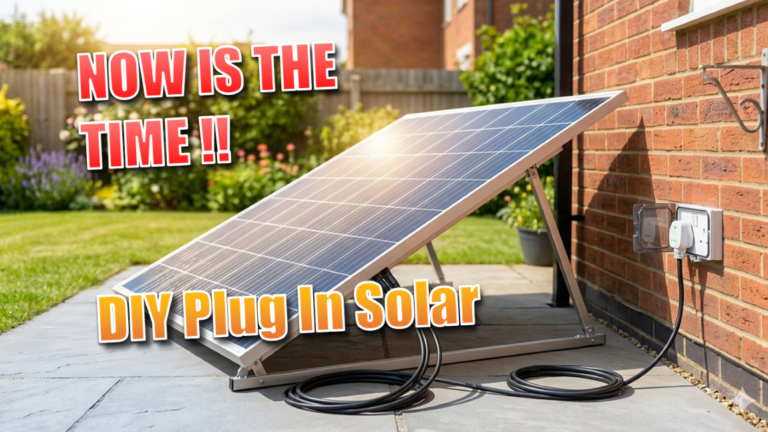
- Your solar panels plug directly into one side of the microinverter.
- The other side of the inverter plugs straight into your household main system via a standard 13-amp plug connection.
By back-feeding electricity straight through a standard wall outlet, it completely skips the incredibly complex and expensive wiring that usually comes with traditional solar installations.
The Legal & Regulatory Reality: The UK Framework
Because you are connecting a power generator directly to your home’s main ring circuit, you cannot treat this like a standard household appliance. Staying compliant with UK regulations is a non-negotiable step.
1. The G98 DNO Notification (Mandatory)
Because the EcoFlow PowerStream is a grid-tied system, you are legally required to notify your local Distribution Network Operator (DNO) within 28 days of commissioning the unit. This falls under the G98 Engineering Recommendation for small micro-generators (systems under 3.68 kW single-phase).
- The Good News: This is a connect-and-notify process, not a rigid application for permission. It is completely free, done via a simple online form on your DNO’s website, and they cannot refuse a compliant, type-tested system.
2. The DESNZ Interim Product Specification
The UK regulatory landscape for plug-in solar is rapidly evolving. The Department for Energy Security and Net Zero (DESNZ) introduced a dedicated framework alongside amendments to the Plugs and Sockets etc. (Safety) Regulations 1994 (PSSR). This establishes a clear legal pathway for plug-in solar kits, setting a hard cap of 800W maximum AC output per home. The EcoFlow system fits beautifully into this emerging standard, acting as a true early pioneer of legal plug-in solar in the UK.
Note: While the wiring regulations were officially amended under BS 7671 Amendment 4 in April 2026 to allow for 800W plug-in solar, the final BSI product certification standards for standalone DIY kits are finishing their rollout this summer. We are right on the absolute frontier of this legal solar revolution!
Safety First: What is “Anti-Islanding” Protection?
The number one question skeptics ask about plug-in solar is: “If I unplug that 13A plug from the wall while the sun is shining, will I get a massive shock from the exposed live pins?” The short answer is no, thanks to a vital safety feature called Anti-Islanding Protection.
The microinverter constantly reads the grid frequency coming from your wall socket. The absolute millisecond it loses connection to the grid—either because you pulled the plug or because your neighborhood suffered a power cut—the inverter automatically decouples and cuts off power to the plug pins within 0.1 seconds. The pins become completely safe to touch almost instantly, preventing any risk of back-feeding live electricity.
Plug-In Solar vs. Traditional Rooftop Solar
To set realistic expectations, it’s helpful to see how a plug-in microinverter setup shapes up against a traditional, professionally installed residential solar array. Here is a clear breakdown of the costs depending on how far you want to expand the system:
| Feature / Hardware Configuration | EcoFlow Stream Plug-In System | Traditional Rooftop Solar |
| Inverter + Two Panels (Standard Kit) | ~£499 | N/A (Part of standard roof build) |
| Inverter + Panels + Stream Batteries | £979 – £1,500+ (dependent on kWh) | £5,000 – £9,000 (Entire installation cost) |
| Installation | DIY / Simple mounting | Certified MCS Solar Installer Required |
| Typical Annual Savings | £70 – £175 per year | £800 – £1,200+ per year |
| Portability | 100% portable (ideal for renters/moving) | Permanent fixture to the property |
| Best Suited For | Renters, flats, balconies, low-budget DIY | Homeowners with large, unshaded roofs |
Note: Because DIY installations cannot easily get MCS certification, you generally won’t qualify for the Smart Export Guarantee (SEG) payouts. This means your ultimate goal is to maximize your self-consumption—either by using the solar power right when it’s generated, or adding an official EcoFlow battery storage module to save that power for the evening.
Technical Specifications Overview
For the tech and data lovers, here is the raw data straight from the back label of the ecoflow PowerStream microinverter:
- Max AC Output Power: 800W / 600W (Software regulated by region)
- Max DC Input Power: 400W x 2 (or up to 600W per channel depending on model variation)
- MPPT Voltage Range: 11V – 55V
- Maximum Input Voltage: 55 VDC
- Inverter Max Efficiency: 96.5%
- Cooling: Natural convection (built-in metallic heat sink ridges)
- Waterproof Rating: IP67
The First Impressions Verdict
On first impressions, the EcoFlow PowerStream microinverter is an incredibly polished, heavy-duty piece of kit. EcoFlow has successfully stripped away the intimidating complexity of traditional solar and made clean energy genuinely accessible for the average household.
But an inverter is only half the puzzle.
To actually make this system run, I need to get my hands on some solar panels, mount them securely, and plug them in.
What’s Next?
In my next post and video, I’m going to be sourcing the panels, setting up the mounting frames, and testing out the EcoFlow app to see what kind of real-world power we can actually generate here in the UK. I’ll be collecting data to work out payback potential, energy generated in various weather conditions and more.
Frequently Asked Questions
Is plug-and-play solar fully legal in the UK right now?
A: We are right on the legal transition line. The wiring regulations (BS 7671 Amendment 4) officially updated on April 15, 2026, creating the framework to allow up to 800W of solar power to be back-fed into a standard domestic ring main. However, the final official BSI product certification standards for off-the-shelf consumer kits are wrapping up their rollout. Until those first BSI-stamped DIY retail kits land on shelves later this year, the fully compliant route technically requires a certified electrician to sign off or hardwire the setup, meaning we are right on the cutting edge of true open DIY.
Q: Do I need an electrician to install the EcoFlow PowerStream?
A: Under the newly passed 2026 regulations, any compliant, certified system capped at 800W AC or lower explicitly removes the requirement for complex hardwiring into your fuse board. You simply plug the microinverter straight into a standard 13A wall socket. While the underlying wiring laws now support this, just ensure your hardware carries proper UKCA/CE markings and full anti-islanding certification if you are self-installing during this transitional period.
Q: Can I use third-party solar panels, or do I have to buy EcoFlow ones?
A: You can absolutely use third-party panels! As long as the open-circuit voltage (Voc) and current of your chosen panels fall within the microinverter’s limits (typically 11V–55V DC), they will work perfectly. You’ll just need to use EcoFlow’s MC4-to-PowerStream adapter cables to connect them.
Q: What happens during a power cut? Will this keep my house running?
A: No. Because the PowerStream is a grid-tied inverter, its built-in anti-islanding protection will shut the unit down within milliseconds of a power cut to keep utility workers safe. If you want backup power during a blackout, you need to pair the inverter with a compatible EcoFlow Portable Power Station (like the Delta 2) and plug your essential appliances directly into the battery outlets.
Q: Will it cause my electricity meter to run backwards?
A: If you have an older, analog dial meter, it technically can, though electricity suppliers don’t like this. If you have a modern digital or Smart Meter, it won’t run backwards. Instead, the smart meter will just register your net grid usage as zero while your solar generation matches or exceeds your home’s idle “baseload” power draw.
Q: Do I still need to notify the grid operator if it just plugs into a wall?
A: Yes. Under the G98 Engineering Recommendation, you are required to submit a “Connect and Notify” form to your local Distribution Network Operator (DNO) within 28 days of plugging it in. It is a completely free online form, and because the system is small and type-tested, the DNO cannot refuse it—they just legally need to know it exists on the local network.
More to Interest You
- Powering the Future: Why DIY Solar is Joining the Stack at Built By Pete
- Ecoflow PowerStream: DIY Friendly Grid-Tied Microinverter
- The Solar Journey: Now is the Time for “DIY Plug In Solar”
Subscribe Now!
I hope you found this Ecoflow Powerstream Microinverter review helpful. If you’re ready to stop guessing and start troubleshooting your own home tech and smart DIY projects safely, head over to the Built By Pete YouTube channel! We’ve got hundreds of step-by-step tutorials to simplify your tech life. Click here to subscribe and hit the notification bell so you never miss a guide!