The Path of Least Resistance: How Plug-In Solar Works to Power Your Home
Introduction: Decoding the Plug-In Solar Flow
How plug-in solar works is a question I get asked a lot. Plug-in solar systems (often called balcony power plants or plug-and-play solar) have exploded in popularity. Homeowners love the simplicity: you mount a panel, plug it into a standard wall socket, and watch your electricity meter slow down. But a common point of confusion remains: How does the electricity know to go to your appliances instead of backing up into the wider grid?
The secret doesn’t lie in smart computer software or complex routing switches. It comes down to basic electrical physics: voltage, impedance, and the path of least resistance.
1. The Microinverter as a Local Power Station
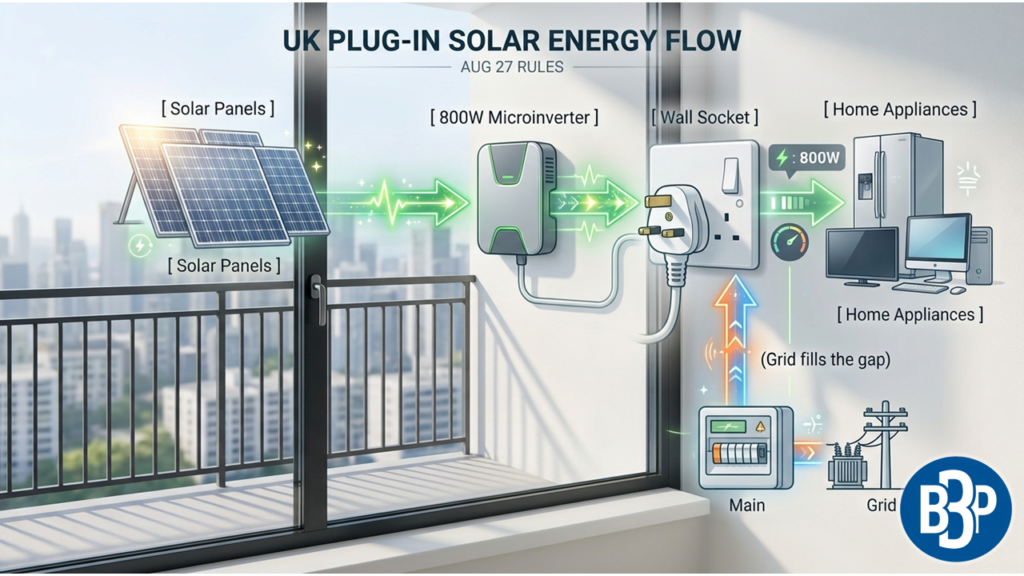
When sunlight hits your balcony solar panel, it generates direct current (DC). The attached microinverter steps in to convert this DC into alternating current (AC)—matching standard household grid voltage—while perfectly synchronizing its frequency and phase with the grid AC coming into your property.
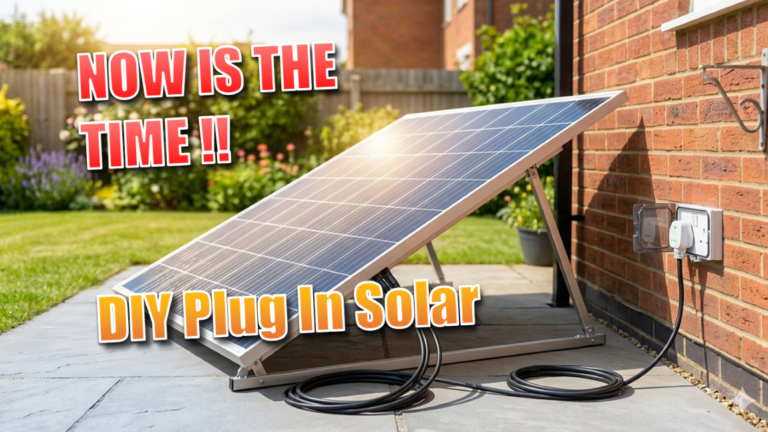
Once plugged into a standard wall outlet, the inverter transforms that outlet into a mini local power station. Instead of your home’s electrical wiring only receiving power from the consumer unit (fuse box) fed by the street, your circuit now features a simultaneous local injection point right inside the room.
2. The Physics of Current Flow and Voltage Dynamics
A common misconception is that local devices take inverter power first because the inverter runs at a lower voltage (e.g., 230V) than the grid (240V). In reality, a grid-tied solar inverter does not output a lower voltage than the incoming grid.
To successfully push electricity into your home circuits and out to the public grid, a solar inverter must synchronize its frequency with the grid and raise its output voltage slightly higher than whatever the local grid voltage is at that exact moment.
- The Higher Pressure Push: Electricity must travel from a point of higher electrical pressure to lower electrical pressure. If your local grid voltage is at 238V, your microinverter dynamically adjusts to push at roughly 238.5V to 240V+ (within safe, legal limits). Because the local generation point has a fractionally higher or equal local pressure compared to the distant street grid, current naturally flows outward from the socket.
- The Grid Source vs. The Local Source: Power from your energy provider travels over long transmission lines, through transformers, through your utility meter, and into your walls, introducing electrical resistance (impedance). Meanwhile, your solar electricity sits right inside your wall socket.
When an appliance (such as a refrigerator, broadband router, or a TV on standby) demands power, it draws current from the closest available source. Because the microinverter is physically much closer and operates at an equivalent or slightly elevated local push, the electricity takes the shorter, lower-impedance path directly into your devices.
3. What Happens Inside Your Home Circuit?
Inside your domestic distribution board, wall sockets and appliances on any specific circuit are wired in parallel. This configuration creates a seamless sharing environment:
- Simultaneous Feed: If your active appliances consume 300W and your plug-in solar panel produces 300W, the local microinverter feeds that 300W directly into the local circuit. Your appliances absorb it instantly, resulting in zero net import from the grid for that specific load.
4. What Happens When Generation Exceeds Demand?
A frequent question is: What if my appliances only need 100W, but my balcony solar is producing 300W?
The excess 200W still follows the path of least resistance. Since it isn’t consumed locally by active appliances, it travels backward through your consumer unit, passes through your electricity meter, and flows out into the public grid. Depending on your meter type and local regulations, this excess either spins older meters backward, registers as uncompensated export, or is credited via a feed-in tariff.
Plug-In Solar is Now Legal in the the UK
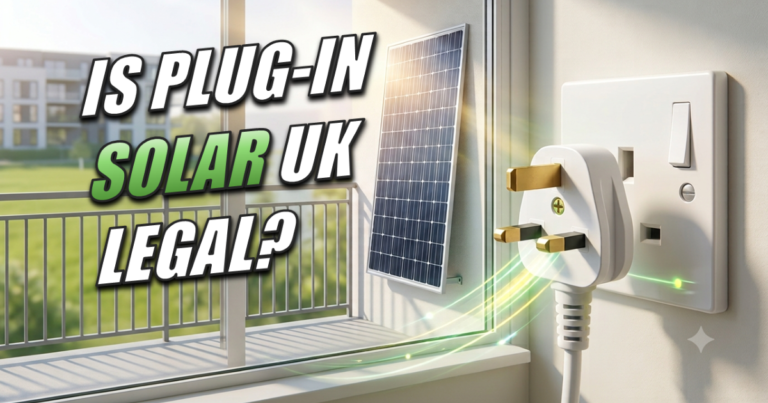
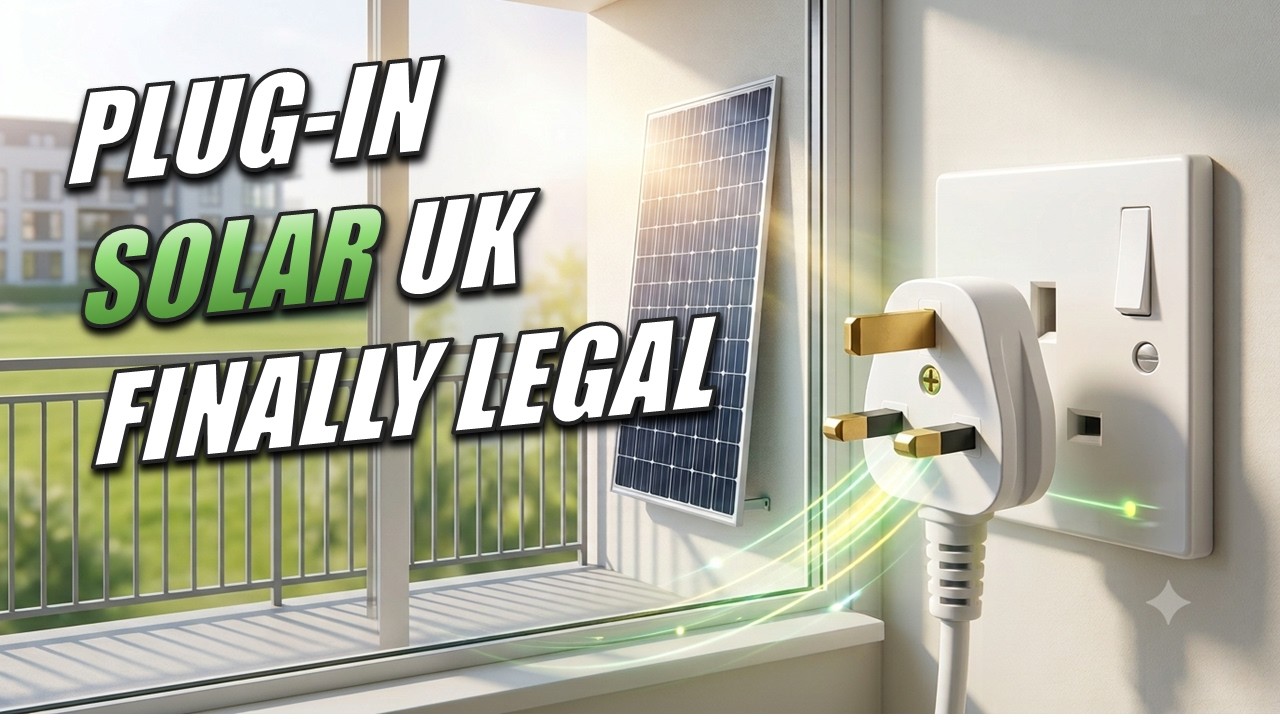
As of August this year, plug-in solar is finally legal in the UK. This is going to unlock the DIYer to install their own solar panels and microinverters. Take a look at my video explaining the new plug-in solar rules after August.
Installing Your Own Microinverter
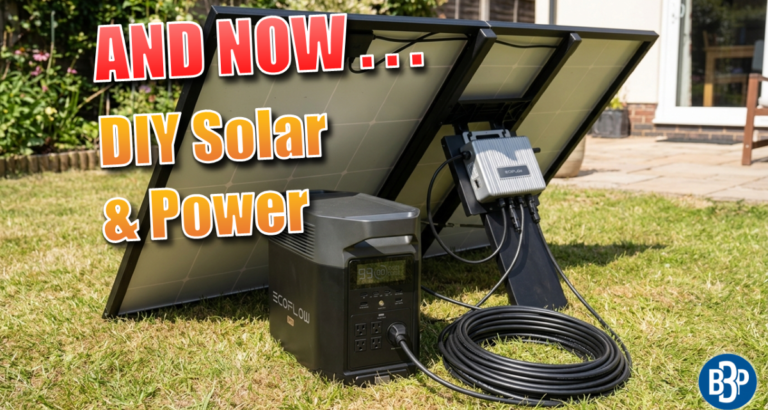
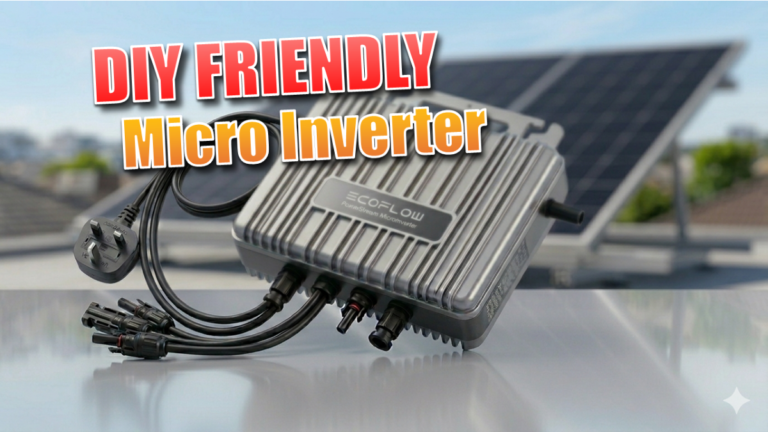
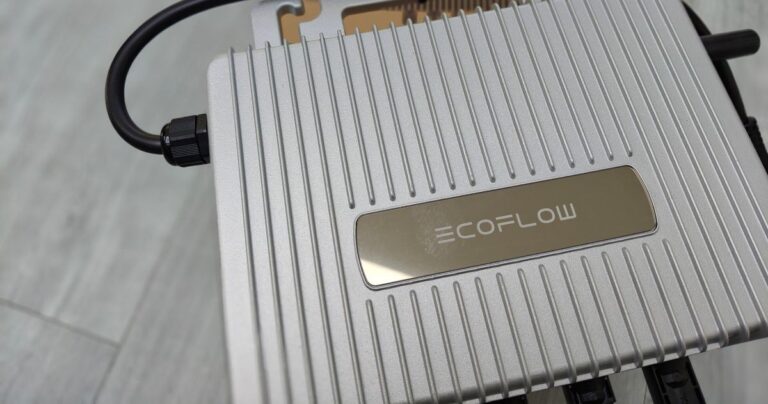
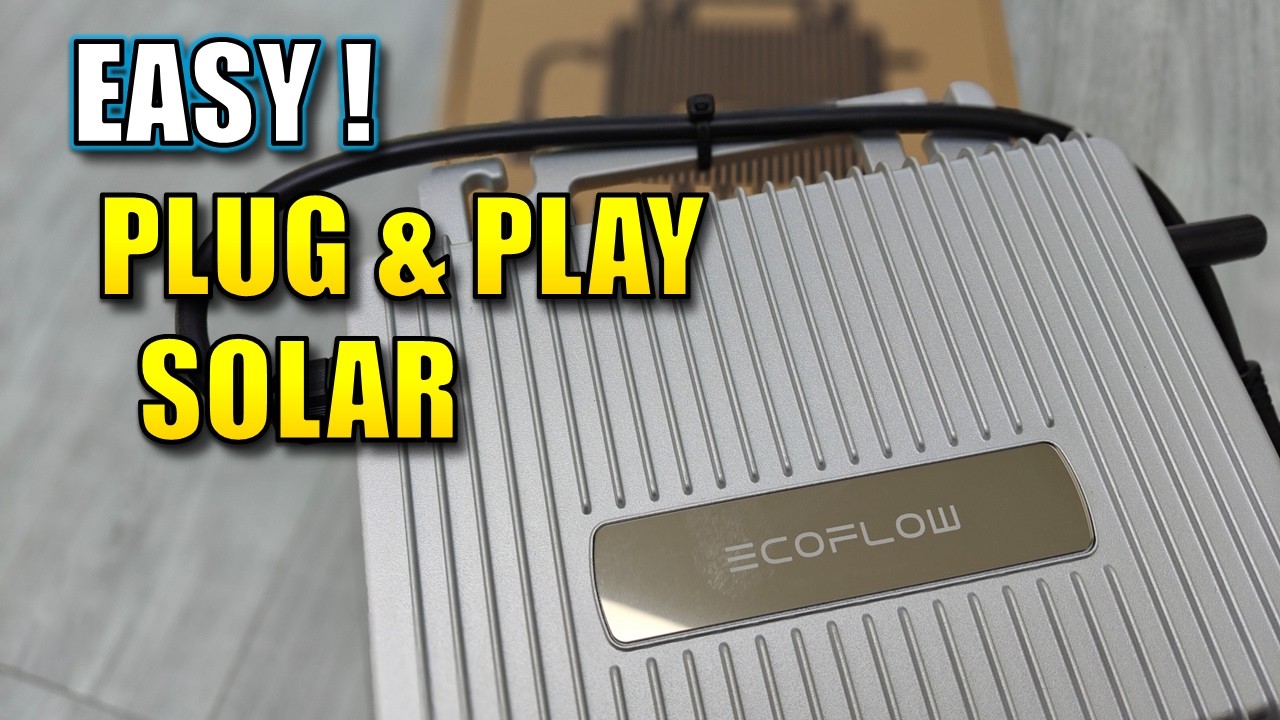
I recently got hold of the new Ecoflow Steam Microinverter so I can finally start DIYing my own free energy. I have written an article here on the blog if you want to read more : Easiest DIY Solar Setup. Or if you prefer, you can watch my unboxing video over on the Built By Pete YouTube channel.
Choosing The Best Solar Panels For Your Microinverter
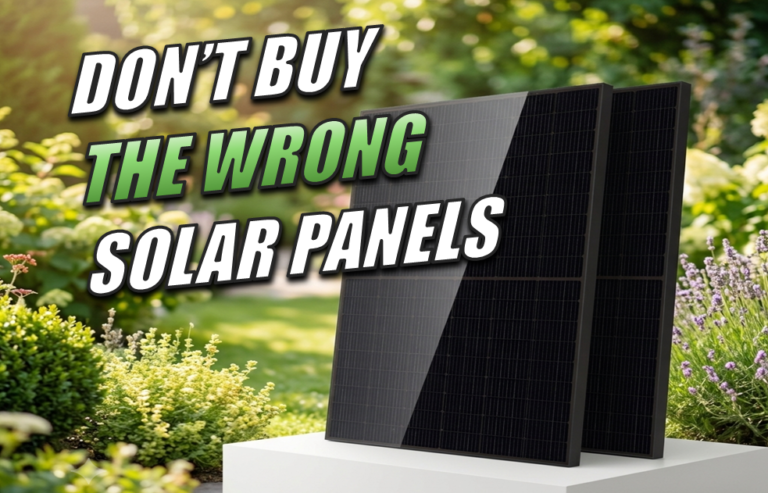
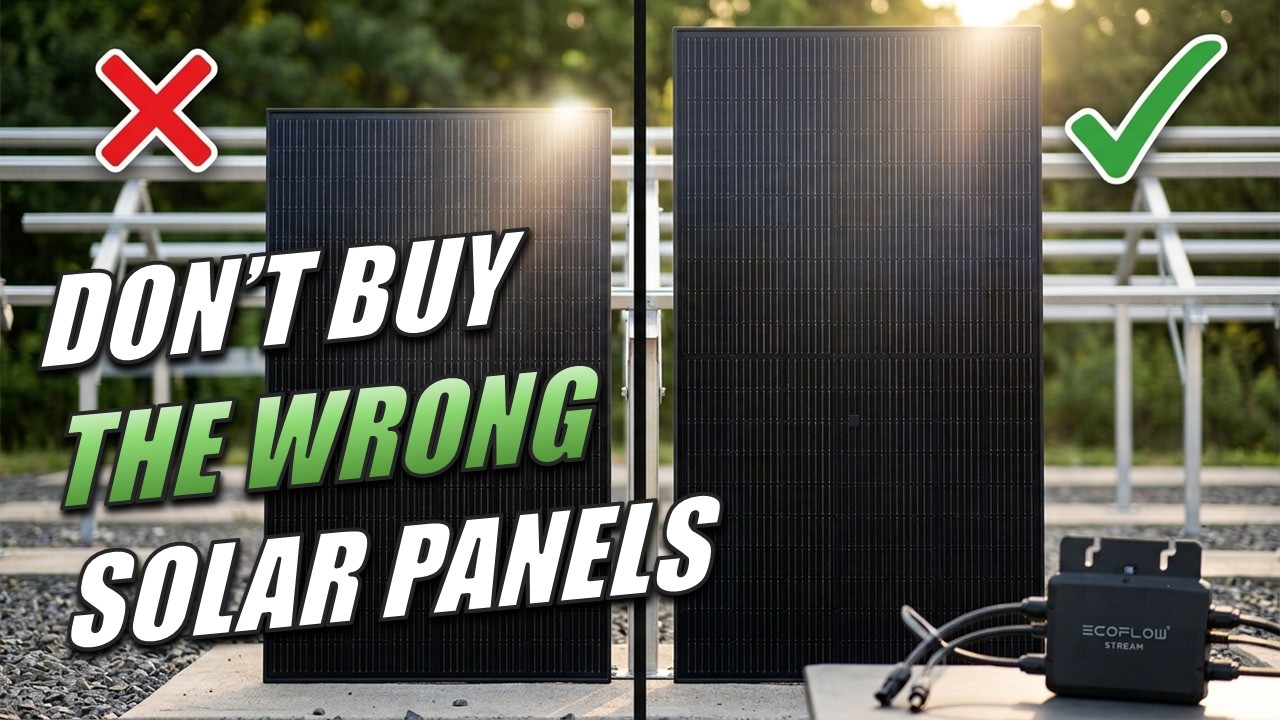
If you get yourself a plug-In Solar kit, they your good to go. But of like me, you purchased the microinverter separately, then you need to get panels that work with your inverter and maximise solar energy generation. I have written article to help. How To Choose The Best Solar Panels.
Or if you prefer a video, you might like to watch my video that explains how to choose the best solar panels.
More Solar Videos You Might Like
As I gain more experience from my solar setup, I’ll create more blog posts here, as well as how-to video guides over on my YouTube channel. I want to make sure all my material that I write or video is based on real work experience and data.
BuiltByPete Solar Guides
Check out solar video reviews, tips and guides on the BuiltByPete Youtube channel .
▶ Explore BuiltByPeteHow Plug-In Solar Works FAQ
Question: How does electricity from plug-in solar get used by appliances?
Answer: Plug-in solar electricity flows through the path of least resistance. Because the microinverter is physically plugged into a wall socket right inside your home, the generated current travels a shorter distance to active appliances than power coming from the distant utility grid.
Question: Do plug-in solar panels power appliances directly?
Answer: Yes. Active household appliances on the same circuit will consume the local energy generated by the microinverter first, reducing or entirely eliminating the need to pull power from the external grid for those specific loads.
Question: What happens to excess plug-in solar electricity?
Answer: If your solar panel produces more electricity than your active appliances are consuming, the excess energy flows backward through your consumer unit and out into the public grid via your electricity meter.
Other Articles You Might Like
- How to Choose the Best Solar Panels for the EcoFlow STREAM Microinverter (And Why You SHOULD Oversize)
- Is Plug-In Solar FINALLY Legal in the UK? (The August 27 Rules Explained)
- The Easiest DIY Solar Setup Ever? (EcoFlow PowerStream Microinverter Unboxing)
- What Home Electrical Work Can You Do Yourself: A Guide to Your Home’s Electrical Supply
- Professional Junction Boxes: Building with DIN Rail Terminal Blocks (UK Guide)
- How to Wire a Wall Socket Correctly (Step by Step Guide)
Subscribe Now!
I hope you found this guide for explaining how plug-in solar works helpful. If you’re ready to stop guessing and start troubleshooting your own home tech and smart DIY projects safely, head over to the Built By Pete YouTube channel! We’ve got hundreds of step-by-step tutorials to simplify your tech life. Click here to subscribe and hit the notification bell so you never miss a guide!