Voltage Drop Calculator: Plan Your Electrical Runs with Confidence
When you’re planning a new circuit, a voltage drop calculator is essential — whether it’s running power to a garden shed, a new workshop machine, or an EV charger—getting the cable size right is the most critical step.
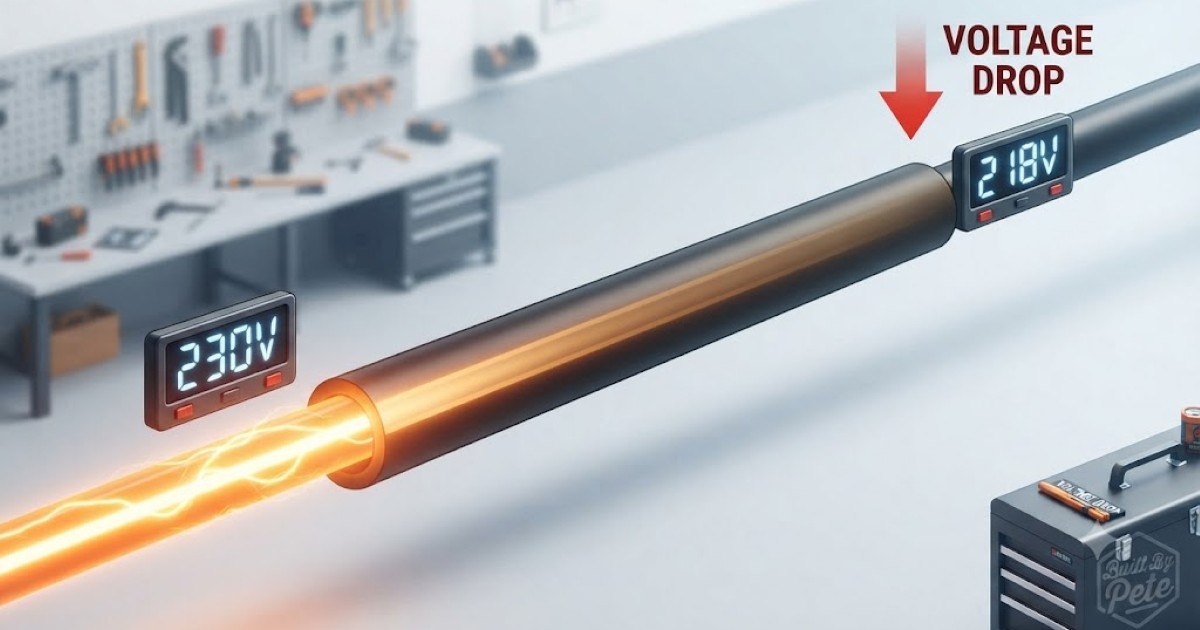
If your cable is too thin or the run is too long, the voltage at the end of the cable will “drop.” This can cause your tools to underperform, lights to flicker, or, in worse cases, cause the cable to overheat. To help you plan your projects safely, we’ve developed this DIY Voltage Drop Calculator.
Why use a Voltage Drop Calculator?
While professional electricians use complex software for building compliance, this calculator is designed to give you a fast, reliable estimate. It uses the standard millivolt-per-amp-per-meter (mV/A/m) method to determine if your chosen cable will handle the load over the required distance.
Voltage Drop Calculator
How to use this tool:
- Select Cable Size (mm²): Choose the size of the cable you plan to use. The tool automatically applies the correct resistance value for that specific cable cross-section.
- Select Supply Voltage: Most UK home projects use 230V, but we’ve included 110V (for site power tools) and 400V (for three-phase machinery) options to make this a truly universal workshop tool.
- Enter Current (Amps): Input the maximum load (in Amps) the circuit will carry.
- Enter Length (Meters): Enter the total one-way route length of the cable run.
Once you click Calculate, you will receive an instant summary showing the estimated voltage drop in Volts and as a percentage of your total supply.
A Note on Safety
This voltage drop calculator is intended for estimation and project planning purposes only. It is not a substitute for professional electrical design. All electrical installations must comply with local safety regulations (such as BS 7671 in the UK). Voltage drop is only one factor in cable selection; you must also consider cable rating, installation method, and external environmental factors. If you are unsure about your circuit design, load requirements, or installation safety, please consult with a qualified electrician before proceeding.
Why Built By Pete?
At Built By Pete, we believe that the difference between a “good enough” project and a professional-grade finish is all in the details. We use this voltage drop calculator every day to ensure our builds are accurate, whether we are building a smart shed or optimising home network layouts. We’ll be building more useful tools for DIYers, so check out the Project Calculator List below to find more helpful tools for your projects.
DIY Project Calculator Tools
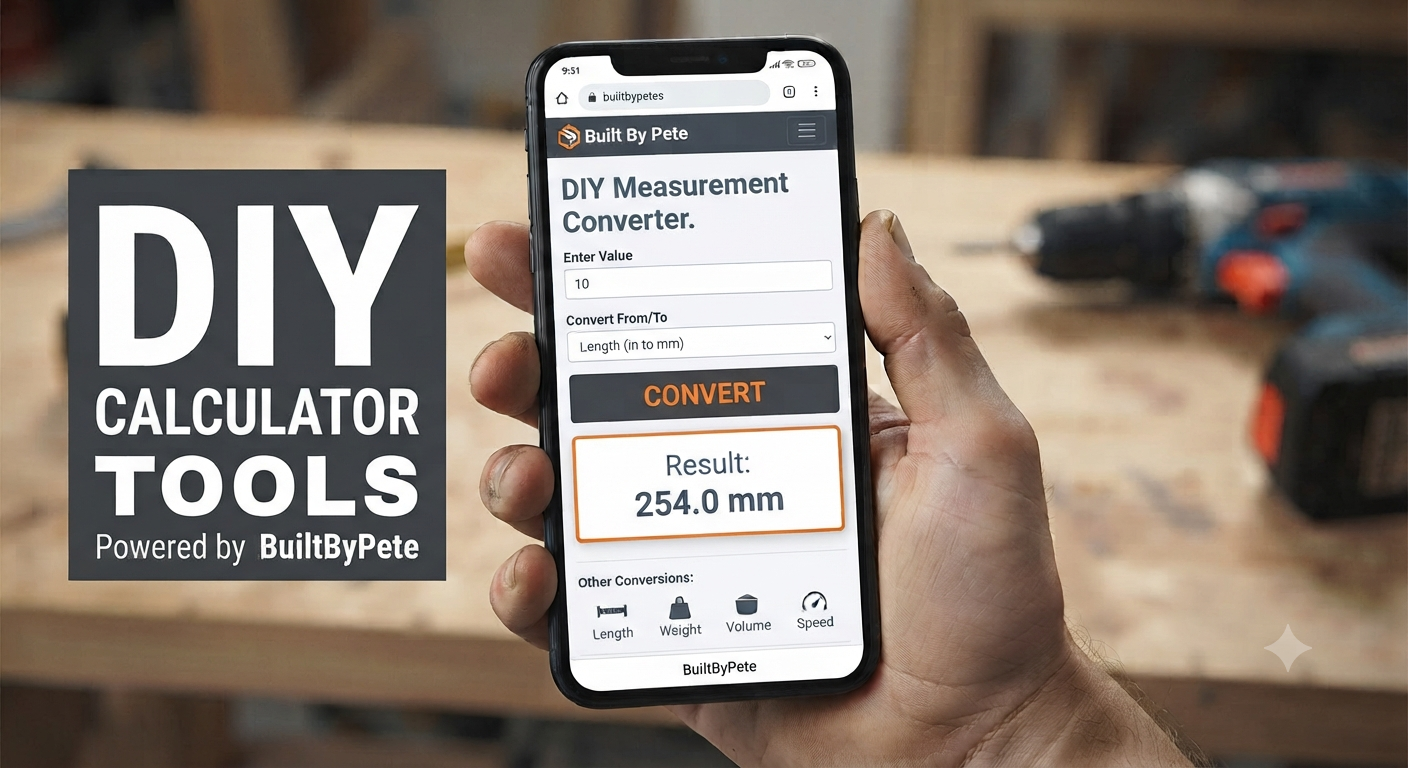
I have put together a number of FREE online tools to help DIYers, including concrete slab calculator, imperial to metric conversions, pilot hole sizes and many more.
DIY Project Calculator Tools
I have put together a number of FREE online tools to help DIYers, including concrete slab calculator, imperial to metric conversions, pilot hole sizes and many more.
▶ See The Project Calculator ListMore to Interest You
- Introducing The Ultimate Smart Shed Build: Why We’re Building a High-Security, Tech-Integrated DIY Shed
- Don’t Buy a Laser Level Until You See the Cigman S04: A Full Hands-On Review
- Why the Neon Mains Voltage Tester Screwdriver is the Most Dangerous Tool in Your Box (And What to Use Instead)
- DeWALT DCS391N Review: The Best Entry-Level 18V Cordless Circular Saw?
Subscribe Now!
I hope you found this DIY Voltage Drop Calculator helpful. If you’re ready to stop guessing and start troubleshooting your own home tech and smart DIY projects safely, head over to the Built By Pete YouTube channel! We’ve got hundreds of step-by-step tutorials to simplify your tech life. Click here to subscribe and hit the notification bell so you never miss a guide!