Is Plug-In Solar FINALLY Legal in the UK? (The August 27 Rules Explained)
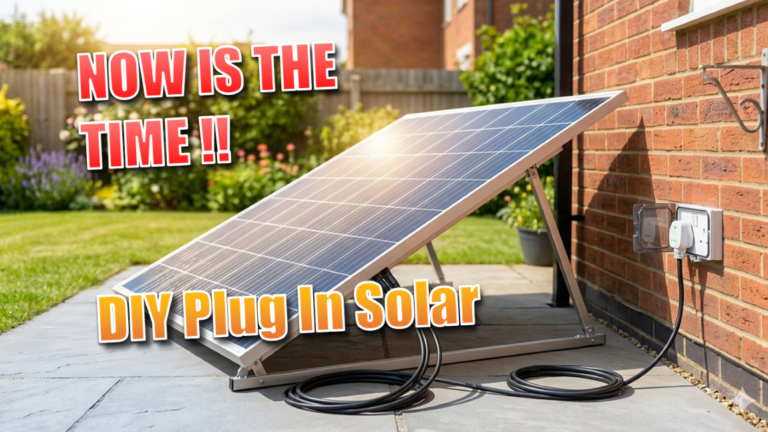
Is Plug-In Solar finally legal in the UK? For years, if you watched DIY creators in Germany or mainland Europe unbox a sleek £500 solar panel kit, hook it up to a balcony railing, plug it into a standard wall socket, and watch their electricity bills drop instantly—you probably felt a sting of envy.
In the UK, doing that exact same thing placed you squarely in a legal and regulatory deadlock.
Our legendary British 3-pin plug (BS 1363) operated under one strict rule since the 1990s: power flows OUT of the socket into your appliance, never BACK into it.
But after months of consultations, the wait is officially over. The UK Government has laid the final plug-in solar regulatory amendments before Parliament, establishing a clear legal path for plug-in solar microgenerators.
Here is everything you need to know about what changes on August 27, 2026, how the technology works safely, and whether a balcony solar setup is right for your home.
What Changes on August 27, 2026?
The updated Plugs and Sockets etc. (Safety) Regulations introduce a specific exemption for certified plug-in solar devices.
Starting August 27, 2026:
- No Electrician Required: You can legally buy an approved kit from retailers (like Amazon, Lidl, Currys, or B&Q) and plug it straight into a standard domestic socket.
- DIY-Friendly Installation: Zero hardwiring, zero heavy construction, and zero structural modifications—making it accessible for renters and flat owners with balconies or patios.
- Streamlined Grid Rules: The G98 distribution rules have been updated. You won’t need prior grid approval; you simply submit a free notification form to your local Distribution Network Operator (DNO) after plugging in.
How Does Plug-In Solar Actually Work?
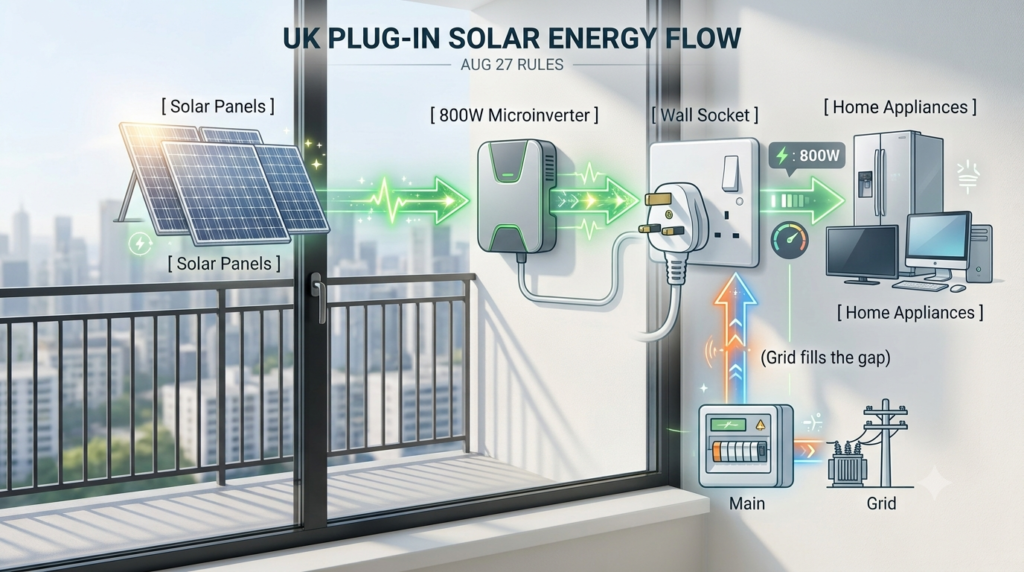
A standard plug-in kit consists of three main components:
- 1 or 2 Solar Panels (typically generating 400W–900W total).
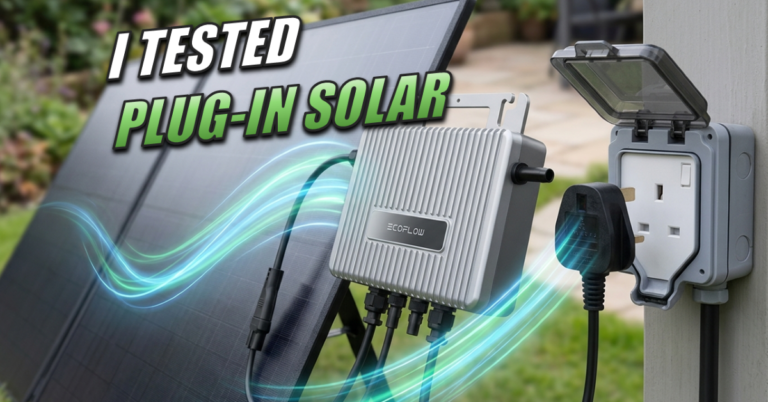
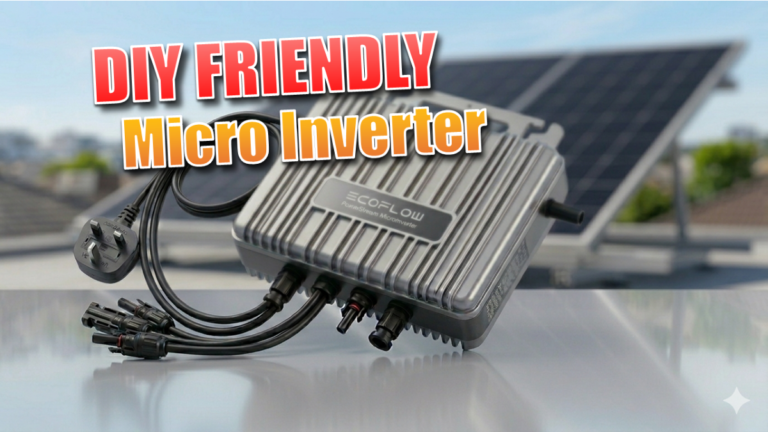
- An 800W Microinverter (converts DC solar energy into grid-synced 230V AC power).
- A Standard UK 3-Pin Plug equipped with certified safety technology.
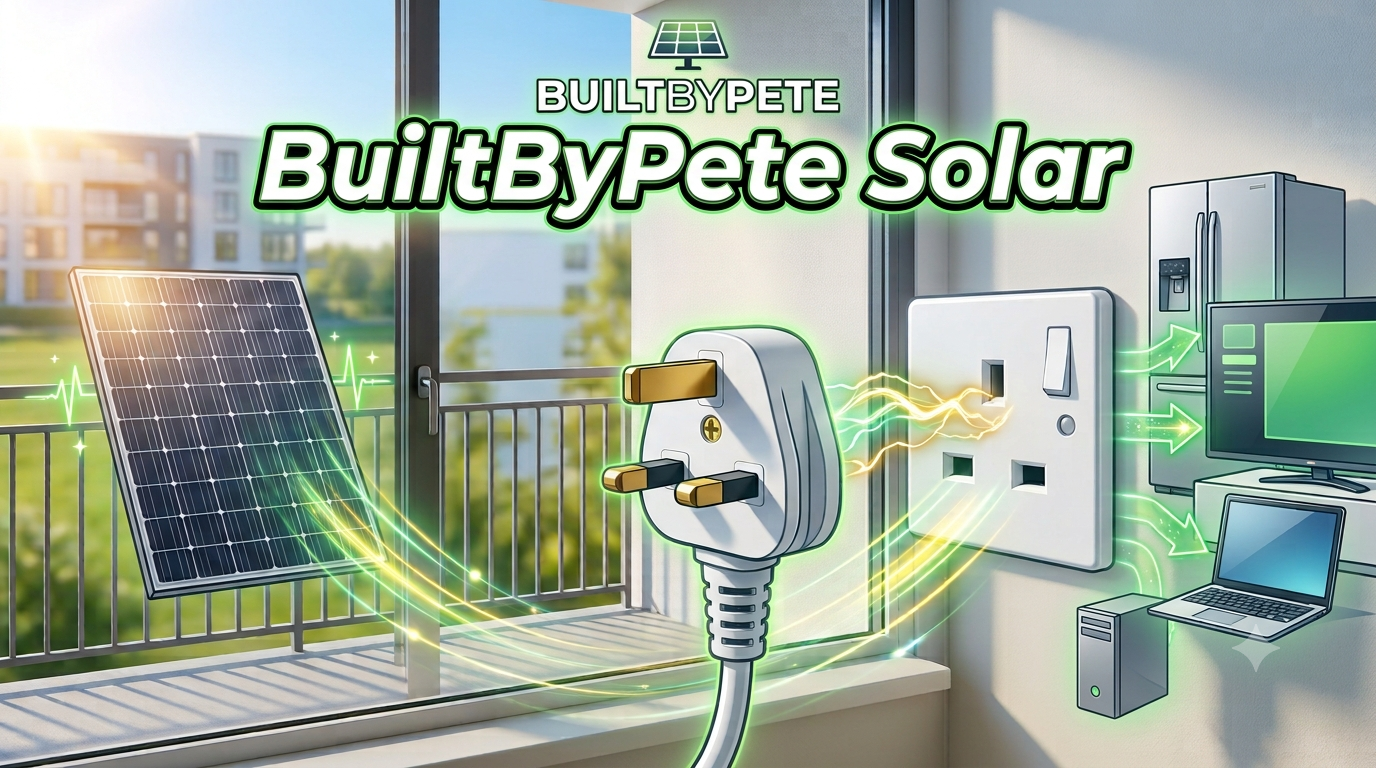
When you plug the inverter into your wall socket, the microinverter feeds electricity into your home’s wiring. Because electricity always follows the path of least resistance, appliances currently drawing power on your home circuit—like your refrigerator, Wi-Fi router, or home office computer—will consume that solar power first before pulling energy from the National Grid.
The 3 Golden Safety Rules You Must Follow
Safety was the primary reason it took the UK longer to legalize plug-and-play solar. To keep your home wiring completely safe, all setups must adhere to three non-negotiable standards:
1. Strict 800-Watt Cap
Systems are legally capped at an output of 800 Watts. Extensive testing showed that residential ring-mains can easily handle up to 800W of reverse current without any risk of wire degradation or overheating breakers.
2. Anti-Islanding Protection (No Shock Risk)
Approved kits must feature rapid auto-shutoff microinverters. If power to the house cuts out—or if you pull the plug out of the wall—the plug-in solar microinverter turns off power transmission within milliseconds. The metal prongs on the plug will not shock you.
3. Direct Wall Connection Only
The microinverter plug must go directly into a fixed wall socket. Plugging solar kits into extension leads, multi-socket adapters, or smart plugs is strictly prohibited under the new safety specification.
What Does “Certified Equipment” Actually Mean?
A core requirement of the updated UK rules is that you cannot simply buy unbranded panels from an online marketplace, attach a cheap inverter, and wire a standard plug onto the end yourself.
To keep your home’s electrical ring-main safe, the law requires a fully certified, factory-built kit.
When a manufacturer claims their plug-in solar kit is “certified” for the UK market, it means the complete system has been independently tested to meet three specific standards:
1. The DESNZ Interim Product Specification
Published by the Department for Energy Security and Net Zero (DESNZ), this framework sets strict technical boundaries for plug-in microgenerators:
- 800VA Inverter Cap: The maximum power output is hard-locked at 800 Watts to ensure internal household wiring never overheats.
- No Batteries (For Now): The current interim specification applies only to solar panels and microinverters. Plug-in battery storage systems are not covered under these initial rules.
2. Plug Safety (BS 1363)
The standard UK 3-pin plug (BS 1363) traditionally prohibited power from flowing backward into a socket. The updated safety specification allows specialized microinverters to connect via BS 1363 plugs, provided they feature certified anti-islanding protection. If you unplug the system or suffer a power outage, the prongs deactivate in milliseconds so they cannot shock you.
3. Grid Compliance (Engineering Recommendation G98)
Inverters must be pre-certified to meet the UK’s G98 grid standard. This ensures the electricity fed into your socket matches the exact voltage and frequency of the National Grid without interfering with appliances or neighboring homes.
What’s the Real ROI? (Is Plug-In Solar Worth It?)
Let’s run the numbers:
| Parameter | Estimated Figures |
| Typical Kit Cost | £400 – £600 |
| Max Power Output | 800 Watts |
| Annual Energy Generated | ~700 – 850 kWh |
| Estimated Annual Bill Savings | £70 – £110 / year |
| Payback Period | 4 to 5 Years |
Compared to traditional rooftop solar systems—which cost £5,000 to £9,000 and take 12+ years to pay back—a balcony kit offers one of the fastest returns on investment in the clean energy market today.
Where to Get an Ecoflow Microinverter
I picked mine up on Amazon. There are quite often sales promotions, so keep your eyes open for those.
- Here’s the Ecoflow Stream Micro Inverter
- Here’s the Ecoflow Amazon Store
Final Verdict: Are You Plugging In?
If you rent your home, live in an apartment with a sunny south- or east/west-facing balcony, or simply want to offset your home’s baseline energy usage without spending thousands, August 27, 2026 is a date to mark on your calendar.
Stay tuned for our upcoming hands-on review and video setup guide. I have purchased an Ecoflow stream 800W microinverter and will be posting regular plug-in solar videos on my Youtube Channel as well as solar posts right here on the blog. I plan on creating setup guides, reviews and publishing real word data to look at energy savings and economic return and see if the estimated figures above manifest in the real world.
I have also written an article to help select the best solar panels. Read my article to find out how to Choose the Best Solar Panels for the EcoFlow STREAM Microinverter (And Why You SHOULD Oversize).
Watch The Video for The New Legal Rules for UK Plug-In Solar
More Solar Videos You Might Like
BuiltByPete Solar Guides
Check out solar video reviews, tips and guides on the BuiltByPete Youtube channel .
▶ Explore BuiltByPeteMore to Interest You
- Powering the Future: Why DIY Solar is Joining the Stack at Built By Pete
- Ecoflow PowerStream: DIY Friendly Grid-Tied Microinverter
- The Solar Journey: Now is the Time for “DIY Plug In Solar”
Subscribe Now!
I hope you found this plug-in solar legal update helpful. If you’re ready to stop guessing and start troubleshooting your own home tech and smart DIY projects safely, head over to the Built By Pete YouTube channel! We’ve got hundreds of step-by-step tutorials to simplify your tech life. Click here to subscribe and hit the notification bell so you never miss a guide!