How to Convert MOV to MP4 (Fast, Free & Secure)
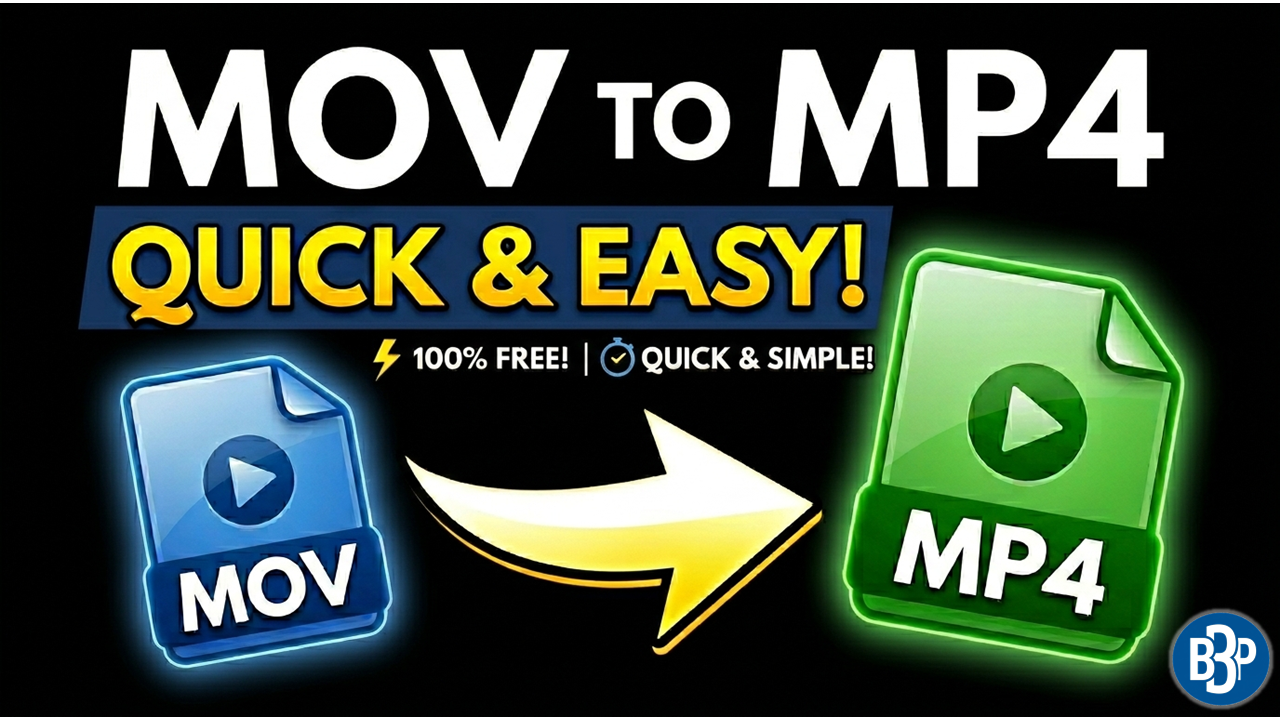
How to convert MOV to MP4. If you’re working with a Mac or an iPhone, your videos are likely saved as .MOV files. While these are great for high-quality editing, they can be a nightmare for sharing. In this guide, we’re breaking down the simplest ways to convert MOV to MP4 so your videos play perfectly on any device.
Watch the Step-by-Step Video
Why Convert MOV to MP4?
These days the digital landscape is more diverse than ever, but MP4 remains the undisputed king of compatibility. Here is the quick breakdown of why you should hit that “convert” button:
- Universal Playback: MP4 works on Windows, Android, Smart TVs, and every major social media platform.
- Smaller File Sizes: MOV files often use “lossless” codecs like Apple ProRes, which are massive. Converting to MP4 (using H.264 or H.265) can shrink your file size by up to 90% without a visible loss in quality.
- Faster Uploads: Smaller files mean you won’t be waiting hours to post your latest vlog or TikTok.
Why Use VLC for Video Conversion?
While there are hundreds of “free” converters online, most of them add watermarks, limit your file size, or compromise your privacy. VLC is:
- 100% Free: No hidden subscriptions or watermarks.
- Lossless Quality: You can convert containers without re-encoding the actual video stream.
- Safe: It’s open-source software with no malware or tracking.
- Local: No online cloud uploads needed. It all stays local on your PC
Step-by-Step: Convert MOV to MP4
1. Open the Conversion Tool
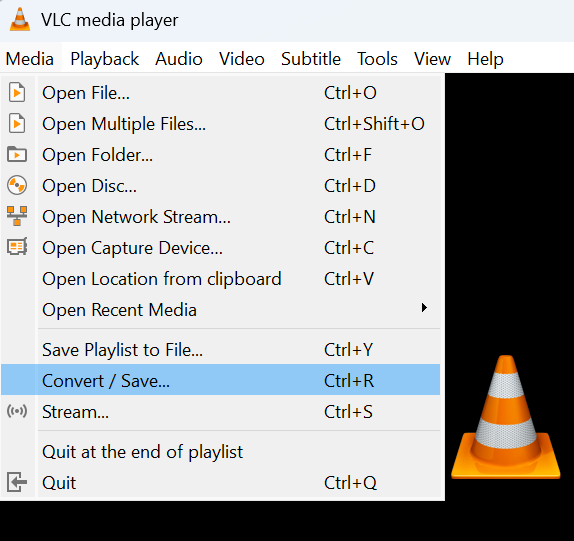
Launch VLC and click on Media in the top-left menu. Select Convert / Save (or use the shortcut Ctrl + R).
2. Add Your MOV File
In the File tab, click the Add button. Browse your computer and select the MOV file you want to change. Once added, click the Convert / Save button at the bottom.
3. Choose the MP4 Profile
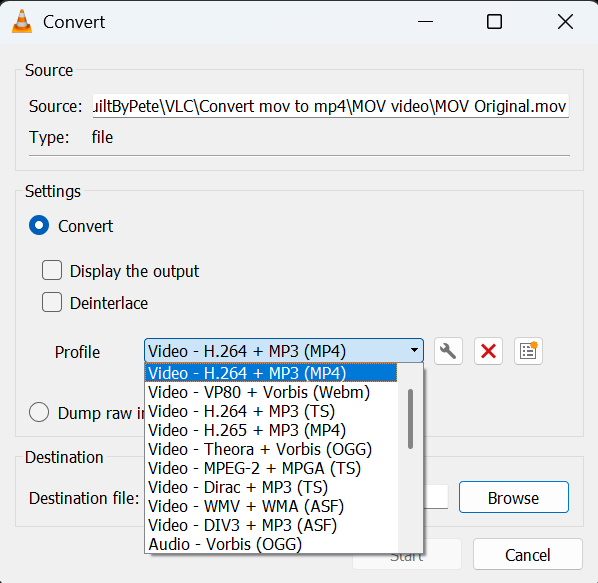
In the Settings window, look for the Profile dropdown. Select Video – H.264 + MP3 (MP4). This is the universal standard that works on almost every device in 2026.
4. The “Manual Extension” Trick (Don’t Skip!)
This is where most people get stuck. VLC sometimes fails to add the file extension automatically.
- Click Browse to select your destination folder.
- Give your file a name.
- Important: Manually type
.mp4at the very end of the name (e.g.,my-video.mp4). - Click Save.
5. Start the Conversion
Click Start. You’ll see the progress bar move across the bottom of VLC. Once it reaches the end, your new MP4 file will be waiting in your folder!
The Privacy Advantage: No Cloud, No Risk
One of the biggest reasons I recommend VLC over “free online converters” is Privacy.
When you use a web-based converter, you are uploading your personal video files to a third-party server. In many cases, you have no idea:
- Who owns those servers.
- If they are keeping a copy of your video.
- If your private data is being used to train AI models.
With VLC, everything stays local. The process to convert MOV to MP4 happens entirely on your own CPU and RAM. Your video never leaves your hard drive, it doesn’t require an internet connection to process, and there is zero risk of your personal files being “leaked” or sold by a cloud service. For anyone handling sensitive footage or family videos, this is the only secure way to convert.
The 3 Best Ways to Convert MOV to MP4 (Free & Fast)
1. The “Old Reliable”: VLC Media Player
Most people don’t realize they already have a powerful converter installed.
- Open VLC, go to Media > Convert / Save.
- Add your MOV file.
- Choose the Video – H.264 + MP3 (MP4) profile.
- Click Start and let it work its magic.
2. The Pro Choice: Handbrake
If you have a batch of files or want total control over the quality:
- Drag your files into Handbrake.
- Select the “Fast 1080p30” preset for a perfect balance of size and clarity.
- Ensure the “Web Optimized” box is checked for faster streaming.
3. The Instant Fix: Online Converters
If your not concerned about uploading your videos to the cloud, then for a one-off conversion without installing software, tools like Adobe Express or CloudConvert are excellent. Just upload, wait a few seconds, and download your new MP4.
Comparison at a Glance
| Feature | MOV (QuickTime) | MP4 (MPEG-4) |
| Best For | Professional Editing | Social Media & Sharing |
| File Size | Large | Small / Optimized |
| Compatibility | Apple Ecosystem | Universal |
| Transparency | Supports Alpha Channels | No Alpha Support |
- MOV (Apple’s Container): Best for high-quality capture and professional editing (Final Cut Pro, Premiere). It handles “lossless” data better but creates massive files.
- MP4 (Universal Standard): Best for everything else. It uses H.264 or H.265 compression to make files small enough for YouTube, Instagram, and mobile phones without a noticeable drop in quality.
Selecting the right video format depends on whether you are editing, archiving, or sharing online. In 2026, MP4 remains the gold standard for compatibility, while WebM has become the primary choice for web performance.
Video Format Comparison Table (2026)
| Format | Best Use Case | Compatibility | Quality | File Size |
| MP4 | Social media, YouTube, and mobile playback | Universal (100%) | High | Small / Medium |
| MOV | Professional editing (Apple ProRes) and high-end production | High (Apple) | Very High | Large |
| WebM | Modern web streaming and website backgrounds | Excellent (Browsers) | High | Very Small |
| MKV | High-quality movie rips and archival (supports multiple audio/subs) | Medium (VLC/PC) | Very High | Large |
| AVI | Legacy Windows systems and simple short clips | High (Windows) | High | Very Large |
Key Insights for Video Creators
- The “Industry Standard”: MP4 (H.264/H.265) is the safest choice. If you aren’t sure where the video will be played, export as MP4.
- The Editing Secret: Professionals often record in MOV (using the ProRes codec) because it is “less compressed,” making it easier for your computer to handle during heavy editing or color grading.
- The Web Specialist: As of 2026, WebM is now fully supported by Safari (Apple), making it the best way to put high-quality video on a website without slowing down page load speeds.
- Transparency: If you need a video with a transparent background (like an overlay or lower-third), you generally must use MOV or WebM, as standard MP4 does not support alpha channels.
Note: Remember that the Container (the file extension like .mp4) is just the “box.” The Codec (like H.264 or AV1) is the “technology” inside that determines the actual quality and size.
Convert MOV to MP4: Frequently Asked Questions
Does converting MOV to MP4 lose quality?
If you use the standard H.264 settings in VLC, the quality loss is virtually invisible to the human eye. VLC essentially “re-wraps” the video into a new container.
Why won’t my converted file play?
If your file looks like a generic white icon, you likely forgot to type .mp4 at the end of the filename during Step 4. Simply rename the file and add the extension, and it should work!
Can I convert MOV to MP4 files in Bulk?
Yes! In the Add step, you can select multiple MOV files. VLC will queue them up and convert them one by one using the same settings.
Your Might Also Like
- Windows 11 No Internet Flowchart: The 60-Second Fix
- How to Find Website IP Address Using Command Prompt (Windows)
- 10 Pro Tips to Increase Your Internet Speed
- Local Network Speed Test (The Easy & Free Way)
Subscribe Now!
If you found this How to Convert MOV to MP4 guide interesting, be sure to check back here often and head over to the Built By Pete YouTube channel! where i’ll post all my DIY Solar Videos. We’ve also got hundreds of other DIY projects and smart home tutorials. Click here to subscribe and hit the notification bell so you never miss out on the tips, tricks, and step-by-step guides that will simplify your tech life.