How to Fit an Electric Socket Blanking Plate: A Clean & Safe DIY Guide
Fit an Electric Socket Blanking Plate. Are you staring at an ugly, unused electrical socket that’s getting in the way of your furniture or a fresh renovation? While you could just ignore it, the professional way to handle unused outlets is to fit an electric socket blanking plate. It’s a simple DIY task that provides a flush, modern finish while ensuring your home’s wiring remains safe and accessible for the future.
In this guide, I’ll walk you through the process of safely isolating wires and installing a decorative blanking plate.
Watch the Step-by-Step Guide
Safety First: The DIY Checklist
Electrical work requires a “safety first” mindset. Before you touch any wires, run through this essential checklist to ensure you are protected.
| Safety Tip | Why It Matters | Action Step |
| Isolate at the Source | The wall switch doesn’t cut power to the wires behind the plate. | Switch off the specific circuit at the Consumer Unit (Fuse Box). |
| Prove Dead | A faulty breaker might not have actually cut the power. | Use a Multimeter or Voltage Tester to verify zero voltage. |
| Safe Termination | Loose wires can touch, causing a short circuit or a fire. | Always use a Terminal Block to secure wire ends. |
| Check for “Nicks” | Screws can pierce wire insulation during installation. | Ensure all wires are tucked away from the screw path. |
| Maintain Earth | Metal plates can become live if there is a fault. | Always connect the Earth Fly Lead to the metal plate chassis. |
UK Wiring Colour Codes: Old vs. New
If you’re working on an older property, you might encounter different wire colours. The UK harmonised its wiring colours in 2004. Use this table to identify your wires correctly.
| Wire Function | New Colour (Post-2006) | Old Colour (Pre-2004) | Terminal Marking |
| Live | Brown | Red | L |
| Neutral | Blue | Black | N |
| Earth | Green & Yellow | Green or Green/Yellow | E |
Warning: Always treat every wire as live until you have personally verified it with a multimeter.
Tools and Materials
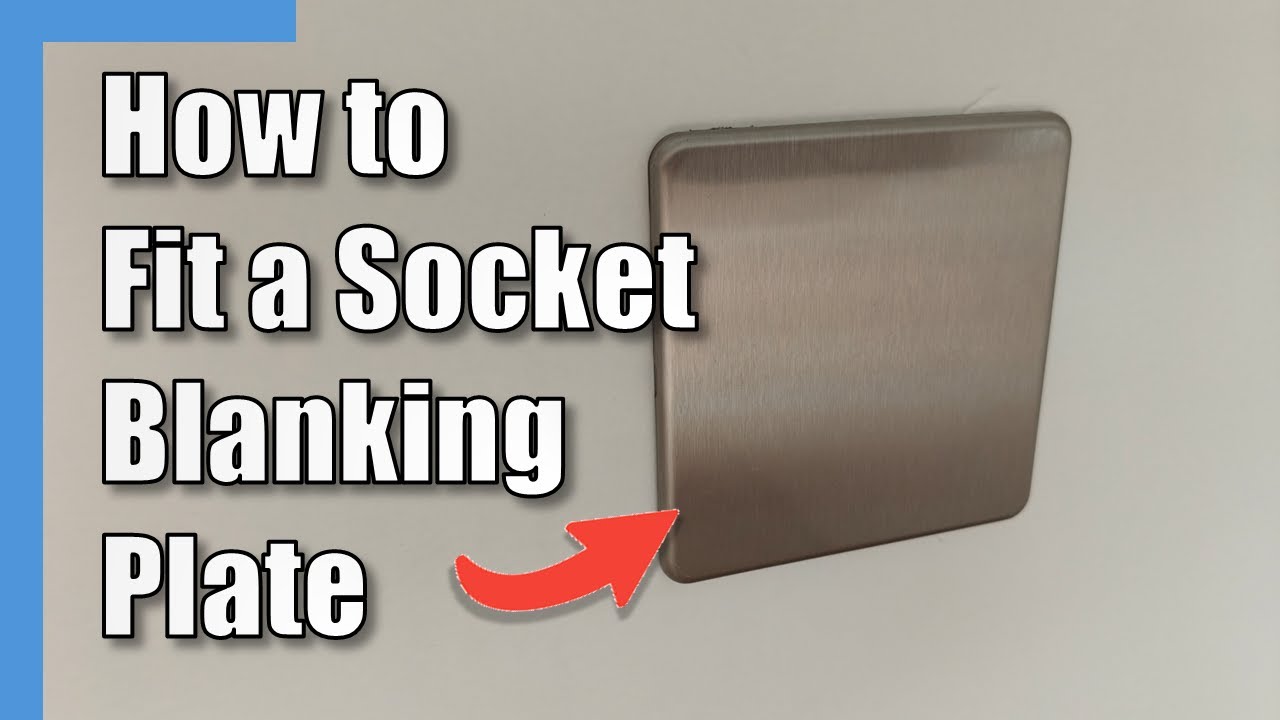
For a finish that matches the modern decor in most homes, I am using the Knightsbridge Brushed Stainless Steel plate. It features a two-part design with a screwless faceplate for a premium look.
- Blanking Plate (Chassis and faceplate)
- 20 Amp Terminal Blocks (to isolate the ring main wires)
- Earth Sleeving
- Insulated Screwdriver
- 2.5mm Earth Fly Lead (if using a metal backbox)
Step-by-Step How to Fit an Electric Socket Blanking Plate
1. Prepare the Backbox
If your wall has a metal backbox (common in UK homes), it must be earthed. Connect an earth fly lead from the backbox lug to the main earth connection. This ensures that if a fault occurs, the metal box won’t become live.
2. Strip and Isolate the Wires
Strip the outer sheath of your 2.5mm cable.
- Pro Tip: Cut the wires to a length that allows them to be curled neatly back into the box. This makes it much easier for you (or a future homeowner) to reinstall a socket later.
- Slide earth sleeving over any bare copper wires to prevent accidental contact with live terminals.
3. Terminate for Safety
Do not leave bare wires hanging in the wall. Use a 20-amp terminal block to securely isolate the Live, Neutral, and Earth wires. This acts as a permanent “cap” for the wires while they are behind the blanking plate.
4. Earth the Plate Chassis
If you are using a metal blanking plate, it will have an earth tab on the back. Connect your earth fly lead to this tab. This is a critical safety step to ensure the decorative plate is grounded.
5. Final Fitting
Tuck the terminated wires into the backbox, ensuring they are clear of the mounting holes. Screw the galvanized steel chassis to the backbox using M3.5 screws. Finally, snap on the decorative faceplate for a clean, screwless finish.
FAQ: Fit an Electric Socket Blanking Plate
Is it legal to do this myself?
Yes. Replacing a socket with a blank plate is generally non-notifiable DIY work in the UK.
Can I leave live wires behind it?
Yes, as long as they are terminated in a proper terminal block—never leave them bare.
Do plastic plates need earthing?
No, but the metal backbox inside the wall still does.
What screws do I need?
Standard UK backboxes use M3.5 screws, usually included with the plate.
Conclusion
Fitting an electric socket blanking plate is one of the most satisfying “quick fixes” in DIY. It improves safety, matches your room’s aesthetic, and keeps your wiring options open for the future. By following the steps above and using the right safety tools, you can achieve a professional result in under 15 minutes.
Share the Knowledge
If this guide helped you tidy up your home, please consider sharing it! Your shares help me keep the Built By Pete site running and allow me to create more free guides for the community.
You May Also Be Interested In These Guides
Join the Community
If you found this How to Fit an Electric Socket Blanking Plate guide interesting and are ready to stop guessing and start troubleshooting your own tech plus smart DIY, head over to the Built By Pete YouTube channel! We’ve got hundreds of other DIY projects and smart home tutorials. Click here to subscribe to the BuiltByPete youtube channel and hit the notification bell so you never miss out on the tips, tricks, and step-by-step guides that will simplify your tech life.