Why the Neon Mains Voltage Tester Screwdriver is the Most Dangerous Tool in Your Box (And What to Use Instead)
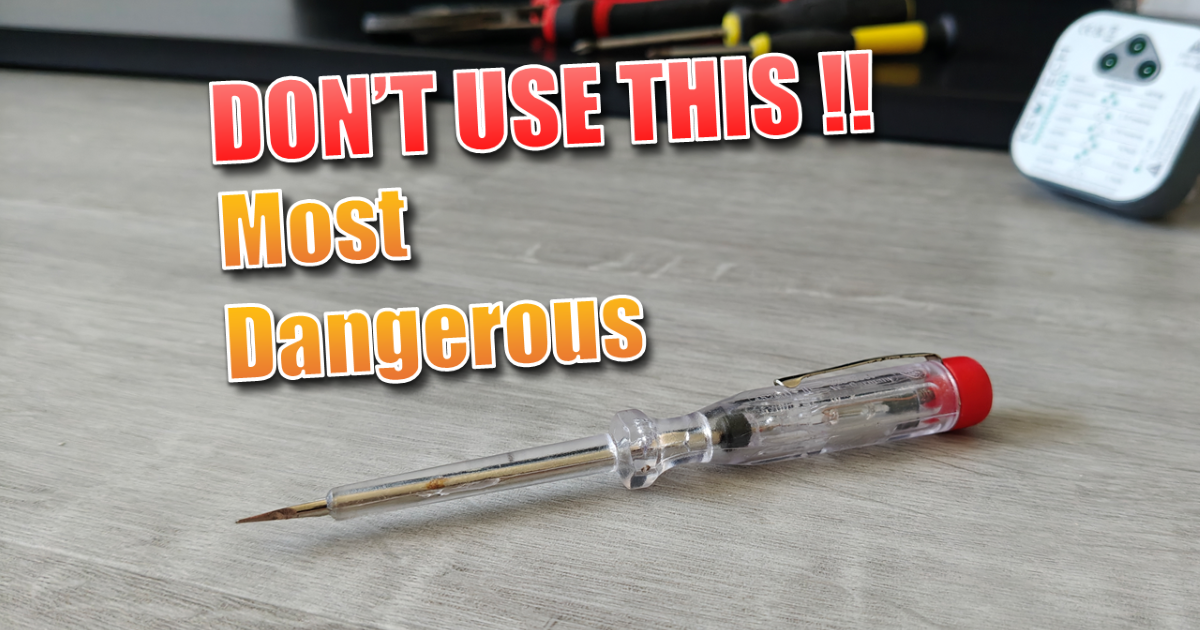
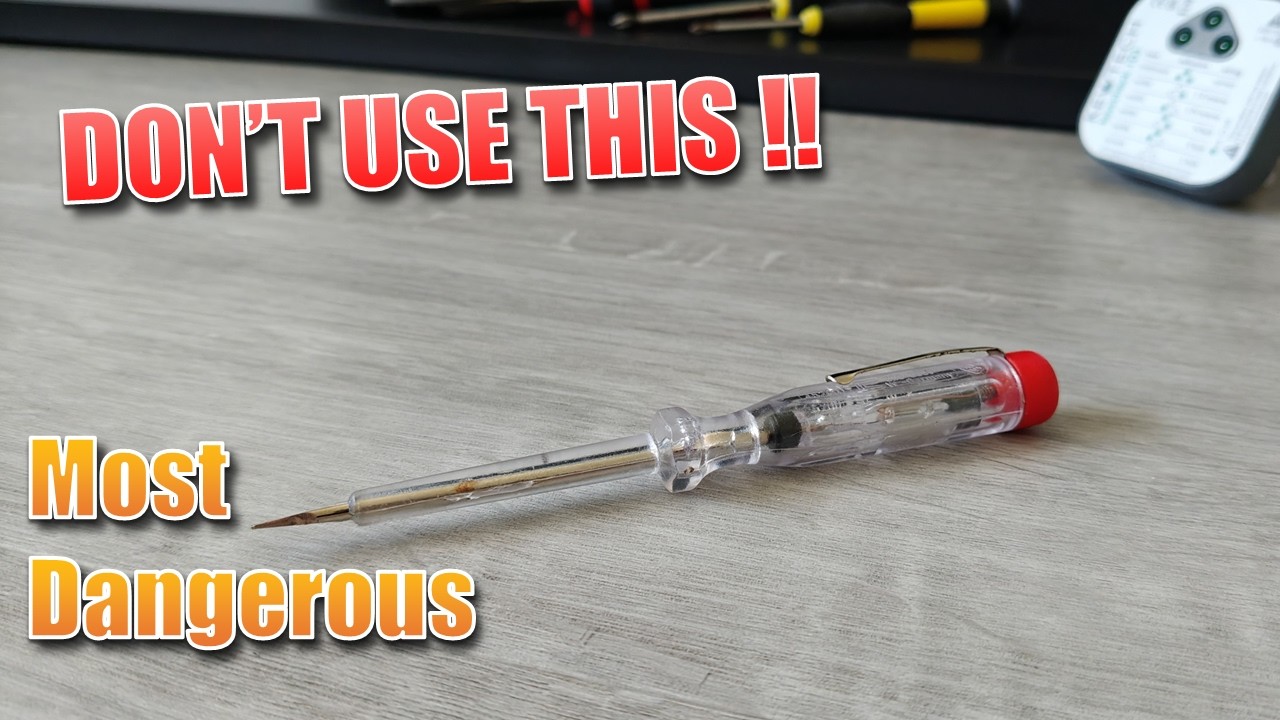
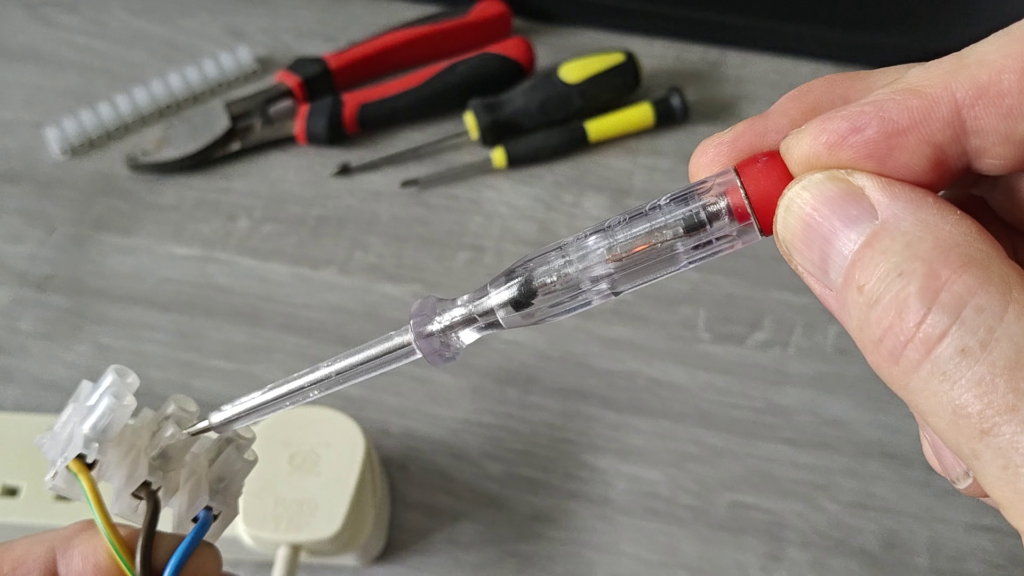
The voltage tester screwdriver – we’ve all got one rolling around at the bottom of a toolbox. It’s that cheap, translucent plastic screwdriver with a little metal clip and a tiny bulb inside. For decades, the neon mains testing screwdriver has been a staple for DIYers looking to check if a wire, socket, or light fitting is live.
But here is the blunt truth: it is easily one of the most dangerous tools you can use. As a DIYer, knowing how to safely handle your home’s electrical equipment is essential. But part of that safety means knowing when a tool is secretly setting you up for a massive gamble. Let’s break down exactly how these pocket testers work, why they are a single point of failure away from sending mains through your heart, and the modern tools you should be using instead.
Watch The Video Guide To The Voltage Tester Screwdriver
How Neon Voltage Tester Screwdrivers Work (And Their First Major Flaw)
Let’s look at the mechanics of how these little pocket testers actually operate. Using one is incredibly straightforward: you stick the metal tip into a terminal and place your finger directly onto the metal cap at the top of the handle.
If the circuit is live, a tiny internal neon bulb lights up inside the plastic casing.
However, this design immediately introduces our first major problem: visibility. The glow from that little neon bulb is notoriously weak. If you are working in a brightly lit room, under garage strip lights, or anywhere outdoors, it is incredibly difficult to see if it’s actually illuminated.
If you turn off the overhead lights, the glow becomes obvious. When your finger touches that top cap, the light shines; take your finger away, and it goes dead. But relying on a tool where you have to squint, shade it with your hand, or turn off other lights just to see if a wire is lethal is a massive safety hazard. If you misread a dim bulb in a bright room, you’ll assume the wire is dead when it isn’t.
The Real Danger: You Are the Missing Wire
This brings us to the most alarming aspect of these screwdrivers: how they complete the electrical circuit. Think about it for a second. To turn on any electrical device, you need a complete circuit—a live feed coming in, and a return path (neutral) going out. When you insert a single metal tester prong into a live terminal, there is no return wire. So, where exactly is that electricity going to complete the circuit and light the bulb?
The unsettling answer is straight into you. By placing your finger on the end of the handle, your body acts as the path to ground. You are physically completing a mains-powered electrical circuit with your own flesh and bone.
Anatomy of a Voltage Tester Screwdriver (And Why You Don’t Get Zapped)
At this point, you’re probably wondering: “If mains voltage is traveling through my finger, why don’t I get a massive electric shock every time I use it?” To understand that, we have to look at what’s hidden inside the handle. The internal anatomy of a typical neon tester consists of a few basic components arranged in a strict line:
- The Metal Stem: The exposed shaft that directly contacts the live terminal.
- The Resistor: A tiny, high-resistance component attached directly to the stem.
- The Neon Bulb: Connected to the other side of the resistor.
- The Spring: A small metal coil linking the bulb to the metal contact button at the very top of the handle.
When you touch that top button, mains current travels up the stem and hits the resistor. This resistor is designed to massively choke down the current to a microscopic, safe level—just a fraction of a milliamp. That tiny trickle of power is enough to illuminate the sensitive neon bulb before it harmlessly passes through your finger and down to earth.
In an ideal world, that works perfectly. But in reality, it relies on a very cheap, mass-produced component never failing.
The Single Point of Failure
The fatal flaw here is that the plastic handle housing all these components is entirely hollow. Because there is an open void inside, it only takes one small internal failure to turn this tool into a direct conduit for lethal voltage.
Imagine two very common scenarios:
- Mechanical Failure: A tiny piece of the cheap internal spring snaps off or deforms over time. It slips down inside the hollow casing and bridges the gap between the metal stem and the top contact point.
- Moisture & Dirt: You leave the screwdriver in a damp toolbox, a cold garage, or use it out in the garden. Condensation or dirt builds up inside the hollow handle, creating a highly conductive path right across the resistor.
If that resistor is bypassed or “bridged” by water or metal debris, there is absolutely nothing left to protect you. The moment you touch that top cap to test a wire, unregulated mains voltage will shoot straight into your finger.
Pete’s Safety Takeaway: Any tool that requires you to physically become part of a live mains circuit just to see if it’s dangerous is a fundamentally bad design. It’s simply not worth the gamble.
What Should a DIYer Use Instead?
Thankfully, modern technology has made testing for voltage incredibly cheap and safe. You do not need to form part of the circuit anymore. Here are the two tools every DIYer should have instead:
1. Non-Contact Voltage Detectors (Volt Pens)
These are inexpensive, pen-shaped tools that work on a non-contact basis. They detect the tiny magnetic field generated by alternating current AC running through a wire. These voltage testers are typical non contact types.
I personally use a budget friendly Kaiweets Non Contact tester. I recently did a video review which you can check out here : 5 Reasons to Upgrade your voltage tester.
- Why they are safer: You don’t have to touch any bare copper or terminals. You simply hover the tip near a cable or socket faceplate. If it’s live, the pen flashes bright red and buzzes loudly. You cannot be shocked by a volt pen because it is completely insulated.
2. Plug-In Socket Testers
If you are replacing wall sockets, a plug-in socket tester is brilliant. You simply plug it into the outlet, and a combination of LED lights or audible tones will instantly tell you if the socket is live, if it’s wired correctly, or if there is a missing earth or neutral connection. One of the simplest and most effective tools in my bag is the Kewtech KEWCHECK103 Mains Wiring Socket Tester.
Watch The Kewtech Kewcheck103 Socket Tester In Action
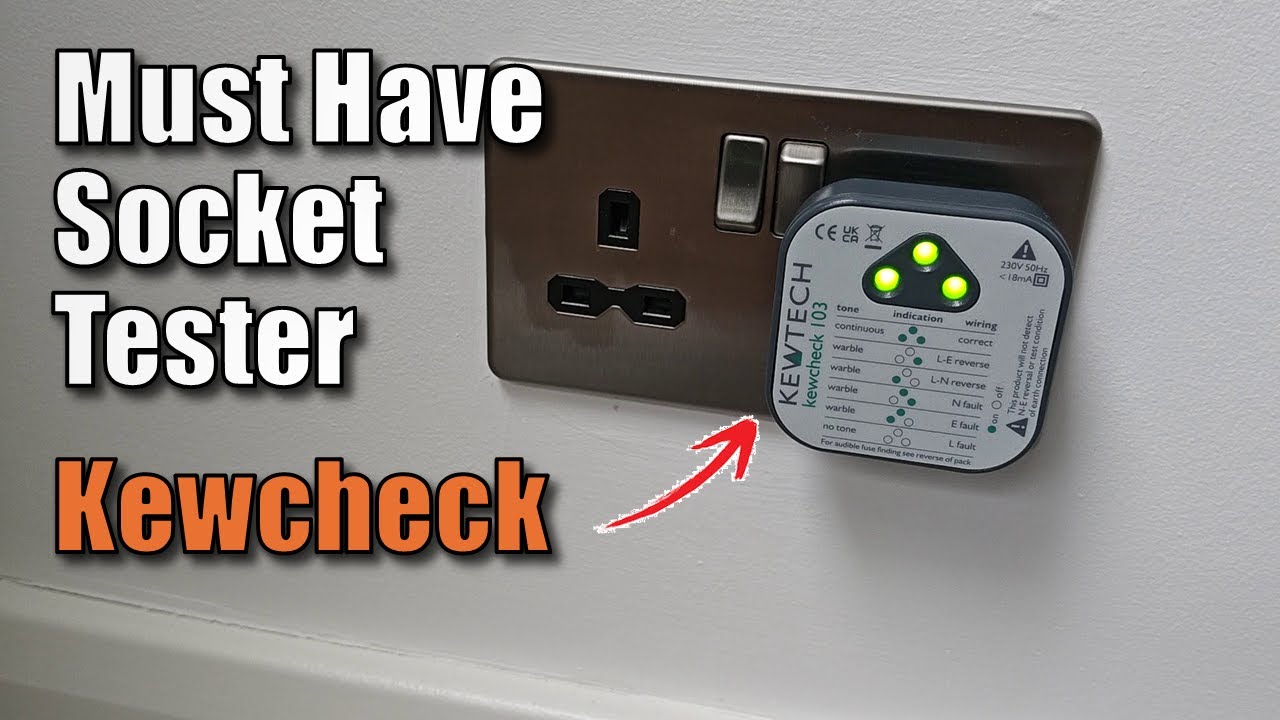
I have already written an article on using this little socket tester here : How to Use the Kewtech KEWCHECK103: The DIY Guide to Testing Your Sockets
FAQ
Q. Can I change a light switch or socket faceplate if my house has old wiring colors (red and black)?
A: Yes, you can do a “like-for-like” swap of a damaged or outdated faceplate yourself, even if your house uses pre-2004 wiring colors. However, you must make sure you match the connections correctly:
Old Red (Live) connects to the new Brown (or terminal marked L).
Old Black (Neutral) connects to the new Blue (or terminal marked N).
Bare Earth wires must always be sleeved with green-and-yellow insulation and connected to the earth terminal (E).
Q. If I have a second consumer unit (e.g., in a garage) and I completely isolate it, can I legally add a new circuit myself?
A: Legally, no. Even if you completely isolate a garage consumer unit from the mains supply while you work on it, installing a brand-new circuit is still classified as notifiable work under Part P of the Building Regulations. Because you are introducing a new protective device (circuit breaker) and running a new circuit that didn’t exist before, it must be inspected, tested, and certified by a registered professional or Local Authority Building Control.
Q. Can I install outdoor lighting myself if it uses 12V or 24V DC?
A: This depends on where the mains voltage ends and where the low voltage 12V or 24V begins. If you run a brand-new mains line from your fuse box to power an outdoor transformer, that is notifiable. However, if you plug a 12V or 24V transformer into an existing outdoor-rated socket or wire it into an existing fused spur, extending the low-voltage outdoor cabling itself is generally non-notifiable under Part P rules in England.
Further Reading
- How to Wire a Wall Socket Correctly (Step by Step Guide)
- UK Domestic Wiring Explained: A Homeowner’s Guide to Safety and Circuits
- How to Change a Double Wall Socket (UK): A Step-by-Step DIY Guide
Subscribe Now!
I hope you found this voltage tester screwdriver guide helpful. If you’re ready to stop guessing and start troubleshooting your own home tech and smart DIY projects safely, head over to the Built By Pete YouTube channel! We’ve got hundreds of step-by-step tutorials to simplify your tech life. Click here to subscribe and hit the notification bell so you never miss a guide!
⚠️ Disclaimer: While minor, non-notifiable electrical alterations like swapping faceplates are legal to do yourself in England, all electrical work must comply with the safety standards of BS 7671. If you are ever in doubt, or do not possess the proper calibrated test equipment to verify a circuit is dead, always call a qualified, registered electrician.