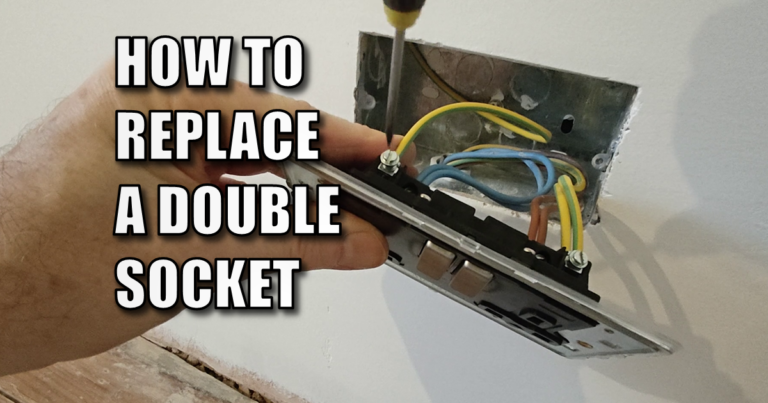
UK Domestic Wiring Explained: A Homeowner’s Guide to Safety and Circuits
UK Domestic Wiring. If you live in the UK, your home’s electrical system is likely governed by standards and circuit types you won’t find anywhere else in the world. Understanding the basics of UK domestic wiring is essential, whether you’re planning a full renovation or just adding a new socket.
Disclaimer: Electricity is dangerous. This guide is for informational purposes only. All significant electrical work in the UK must comply with Part P of the Building Regulations and be carried out or certified by a registered, competent person.
1. The Foundation: The IET Wiring Regulations (BS 7671)
The single most important document governing your home’s electrics is BS 7671 (known as the IET Wiring Regulations). Every modern installation, modification, or addition must adhere to the current edition—which is the 18th Edition (with amendments).
Key Changes You Should Know About:
| Feature | Pre-18th Edition (17th Ed.) | Current 18th Edition (with Amds.) |
| RCDs (Protection) | Required for most sockets and concealed cables. | Mandatory RCD protection for all circuits (unless a risk assessment proves otherwise). |
| Cable Support | Metal supports were mainly needed only in escape routes. | All wiring systems must be supported to prevent premature collapse in a fire. |
| AFDDs (Arc Fault) | Not covered. | Recommended (and often mandatory in high-risk residential buildings) to detect arc faults that can cause fire. |
| SPDs (Surge) | Rarely required. | Mandatory in many installations to protect against voltage spikes (transient overvoltages). |
The Heart of the System: Your Consumer Unit
The modern Consumer Unit (CU), commonly known as the fuse box, is the central distribution point for all circuits in your home and, crucially, your main line of defense. Current regulations require all new consumer units to have a non-combustible (metal) enclosure for fire safety. Inside, you’ll find the main switch and a series of protective devices: MCBs (Miniature Circuit Breakers) that protect against overcurrent, and RCDs (Residual Current Devices) or RCBOs (Residual Current Breaker with Overcurrent protection) that rapidly cut power if an electrical fault is detected, protecting people from electric shock. Upgrading an older unit is often the single biggest electrical safety improvement you can make.

DIY Limitations at the Consumer Unit
Crucially, the replacement or upgrade of an existing Consumer Unit is classed as Notifiable Work under Part P of the Building Regulations. This means that a homeowner cannot simply replace it and deem it compliant. This work must either be:
- Carried out by an electrician registered with a Competent Person Scheme (e.g., NICEIC or NAPIT), who can self-certify the work and notify Building Control; OR
- Notified to your Local Authority Building Control before the work starts, and then inspected and signed off by them upon completion (often involving multiple inspection visits). Failure to comply can result in fines up to £5,000 and issues when selling your property.
Takeaway: If your consumer unit (fuse box) is old, it likely doesn’t meet the current safety standards for RCDs or surge protection.
2. UK Circuitry: Ring vs. Radial
The UK domestic wiring is famous for its Ring Final Circuit, a design dating back to post-WWII copper shortages. You typically have two types of circuits powering your sockets and appliances:
A. The Ring Final Circuit (Ring Main)
A ring circuit starts at the consumer unit (CU), runs through all the sockets in an area (like a ground floor), and then loops back to the same terminals in the CU.
- Cable Size: Typically 2.5mm² Twin and Earth (T&E).
- Protection: Usually a 32A MCB (or fuse).
- Pros: It allows current to flow in two directions, which halves the load on the cable, permitting more sockets to be run from a single 32A breaker.
- Cons: If the ring breaks (becomes an open circuit), the current only flows one way, potentially overloading one side without tripping the breaker. This is why testing is critical!
B. The Radial Circuit
A radial circuit starts at the CU and runs out to the sockets or appliance, but does not loop back. It simply ends at the last point.
- Cable Size: Varies. 2.5mm² T&E for smaller radials (on a 20A breaker) or 4mm² T&E for larger radials (on a 32A breaker).
- Protection: Varies based on cable size, usually 20A or 32A MCB.
- Used For: Most commonly used for dedicated, high-load appliances like cookers, electric showers, and immersion heaters. New builds are also seeing more use of radial circuits for general sockets due to simpler testing.
3. Essential Wiring Components and Colours
You need to know the basic cable types and colours—especially if you encounter older installations.
UK Cable Colours (Modern Standard)
| Wire Colour | Function |
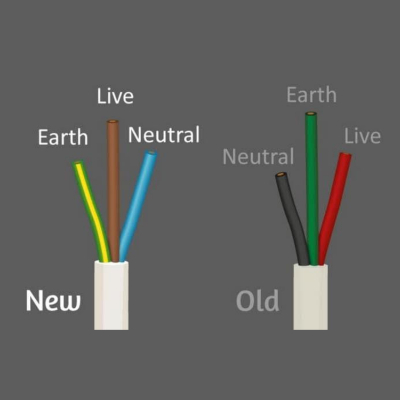
| Brown | Live (L) – Carries the electrical current. |
| Blue | Neutral (N) – Completes the circuit, returns current to the source. |
| Green/Yellow Stripe | Earth (E) – Protective safety conductor. |
Historical Note: In very old UK homes, you might still find the old colours: Red (Live), Black (Neutral), and Green (Earth). Never assume: always test!
The Go-To Cable: Twin and Earth (T&E)
The workhorse of UK domestic wiring is the Twin and Earth cable.
- It contains one brown (Live) and one blue (Neutral) insulated core, plus a single bare Earth wire.
- The bare Earth wire must always be sleeved with a green/yellow sleeve at its termination points for safety.
4. Part P: The Legal Safety Requirement
Part P of the Building Regulations for England and Wales mandates that homeowners must ensure all new fixed electrical work meets the safety standards of BS 7671.
What is Notifiable Work?
Work that must be inspected by Building Control or completed by an electrician registered with a Competent Person Scheme (CPS) (like NICEIC or NAPIT) includes:
- Installing a new circuit.
- Replacing a consumer unit.
- Work in a special location (e.g., a bathroom/shower room).
- Any addition or alteration to an existing circuit in a ‘special location’.
If in doubt, consult a qualified, registered electrician. Electrical safety is not an area for guesswork.
Further Reading
- How to Fit an Electric Socket Blanking Plate: A Clean & Safe DIY Guide
- How to Change a Double Wall Socket (UK): A Step-by-Step DIY Guide
- Why You Need Wire Ferrules for the Best Crimp Connections
- The 5-Minute Trick: How to Easily Straighten Cables and Remove Annoying Kinks
UK Domestic Wiring FAQ
Can I do my own electrical work in the UK?
Yes, but with limitations. Minor works—like changing a light fitting, replacing a socket faceplate, or adding a light to an existing circuit (outside of a bathroom)—can be done by a competent DIYer. However, significant work like installing a new circuit or replacing a consumer unit is notifiable under Part P and must be signed off by a professional.
What is the difference between a Ring and a Radial circuit?
A Ring Final Circuit loops from the consumer unit, through all the sockets, and back to the consumer unit, allowing current to flow in two directions. A Radial Circuit runs in a straight line from the consumer unit and ends at the last socket or appliance. Rings are common for general sockets, while Radials are typically used for high-load items like cookers or showers.
I found Red and Black wires in my wall. Is this safe?
Red and Black were the standard UK wiring colours before 2004 (Red = Live, Black = Neutral). While old colours aren’t inherently “unsafe,” their presence suggests your wiring is at least 20 years old. You should have an EICR (Electrical Installation Condition Report) carried out to ensure the insulation hasn’t degraded.
Why does my bare Earth wire need a green/yellow sleeve?
In Twin and Earth cable, the Earth wire is left bare to save space and cost. However, once you strip the cable for a connection, you must add green and yellow sleeving. This prevents the bare wire from accidentally touching a Live terminal and ensures it is clearly identified as a safety conductor.
What is an RCD and do I need one?
An RCD (Residual Current Device) is a life-saving safety switch that trips the power in milliseconds if it detects a leak to earth (which could mean someone is being electrocuted). Under the 18th Edition regulations, RCD protection is now mandatory for almost all domestic circuits.
How do I know if my electrical work needs to be “Notified”?
Under Part P, you must notify Building Control if you are:
– Installing a brand new circuit.
– Replacing your Consumer Unit (fuse box).
– Carrying out any electrical work in “special locations” like a bathroom or around a swimming pool.
Subscribe Now!
If you found this UK Domestic Wiring guide helpful and are ready to stop guessing and start troubleshooting your own tech plus smart DIY projects, head over to the Built By Pete YouTube channel! We’ve got hundreds of other DIY and tech guides and smart home tutorials. Click here to subscribe and hit the notification bell so you never miss out on the tips, tricks, and step-by-step guides that will simplify your tech life.