Building the Ultimate Smart Shed (Part 1): Plans & Site Preparation
Build a shed from scratch. Are you tired of flimsy, overpriced, off-the-shelf garden sheds? Most store-bought kits are built to a price point, not a quality standard. They often feature thin timber, basic security, and almost no room for customization.
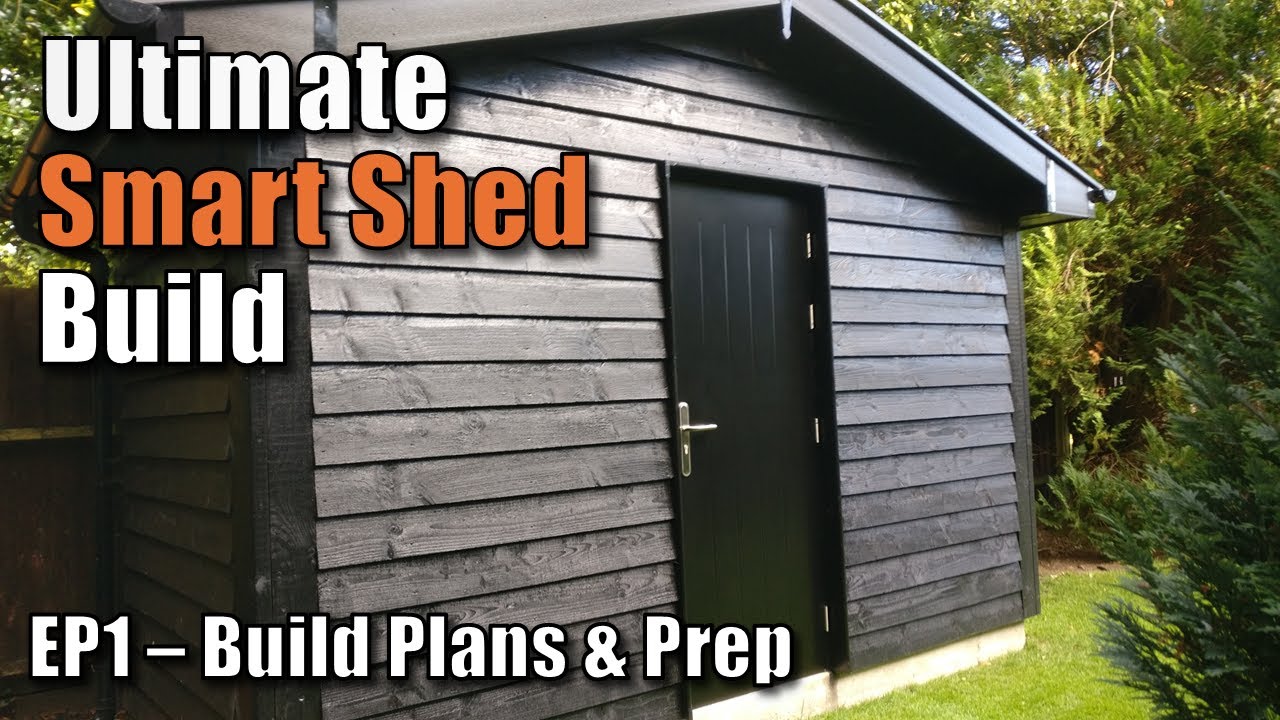
In this new series, I am building the Ultimate Smart Shed from the ground up. We aren’t just building a storage box; we are building a high-spec, secure, and tech-ready workspace that is truly built to last.
Watch the Build Begin
Why Build from Scratch vs. Buying a Kit?
While flat-pack sheds offer convenience, they often fail in three key areas:
- Durability: Kits use thin 2×2 timber or less. I’m using robust 4×2 pressure-treated construction grade timber for the frame.
- Security: A simple padlock is easily bypassed. Our build integrates reinforced doors and smart security from day one.
- Future-Proofing: Good luck running network cables or heavy-duty power through a flimsy kit. This shed is designed with internal conduits for lighting, power, and high-speed Ethernet and more.
Phase 1: The Design & Strategy to Build a Shed from Scratch

Before picking up a saw, you need a roadmap. For my “Ultimate” design, I’ve gone with a “posh” high-spec approach:
- Dimensions: A 12ft x 6ft footprint, standing roughly 9ft tall—sized perfectly for a garden without needing complex planning permission (though always check your local rules for planning permission before starting!).
- Roof Design: An Apex (pitched) roof for better headroom and superior water runoff. We’re finishing it with slate tiles.
- Wall Structure: Double-layer cladding. We’re using structural OSB sheets, an air gap for damp protection, and a final finish of feather edge cladding.
- Internl Walls: after installing rockwool insulation, the walls will be finished marine ply
- The Smart Foundation: I’ve pre-planned the internal layout for a dedicated workbench and pre-routed paths for smart device connectivity.
Phase 2: Battlefield Clearance (Site Prep)
You can’t build a palace on a rubbish dump. My chosen site was a dense, overgrown patch of weeds and old tree stumps.
Site clearance is the most underrated step in a high-quality build. I spent time clearing bushes, cutting back overhanging trees, and removing old paving slabs to ensure I had the full 12ft+ clearance needed for the footprint. If you leave roots or uneven ground now, your foundation will fail later.
What’s Next?
The site is clear, the plans are drawn, and the vision is set. In the next post, we tackle the most critical part of the physical build: Laying a rock-solid concrete foundation.
Stay Tuned for the Series:
- Next Post: Part 2 – Laying the Concrete Base (Coming Soon)
- Related Reading: “If you haven’t seen it already, read the first shed project post The Ultimate Shed Series Intro“
- Related Reading: “If you’re planning your own smart workspace, check out my Internet Failover guide to ensure your shed stays connected even if your main line goes down.”
- Related Reading: “If your considering running electric to your shed, check out our domestic wiring guide“
Favourite Tools: Here’s some of the tools used for the shed build series:
- Dewalt Store : https://amzn.to/4mSlXiL
- Spirit Level : https://amzn.to/4fZJw6A
- Utility Knife : https://amzn.to/47WncZz
- Drill : https://amzn.to/3HBjudm
- Impact Driver : https://amzn.to/47jO1GZ
- Screws : https://amzn.to/3K8SiDG
- Skill Saw : https://amzn.to/41XJiY3
Subscribe Now!
If you found this episode of the Ultimate Shard Build interesting and are ready to stop guessing and start troubleshooting your own tech plus smart DIY, head over to the Built By Pete YouTube channel! We’ve got hundreds of other DIY projects and smart home tutorials. Click here to subscribe to the BuiltByPete youtube channel and hit the notification bell so you never miss out on the tips, tricks, and step-by-step guides that will simplify your tech life.